.webp)


.png)


the Unchosen
A09 Huang Jingwen
|1|
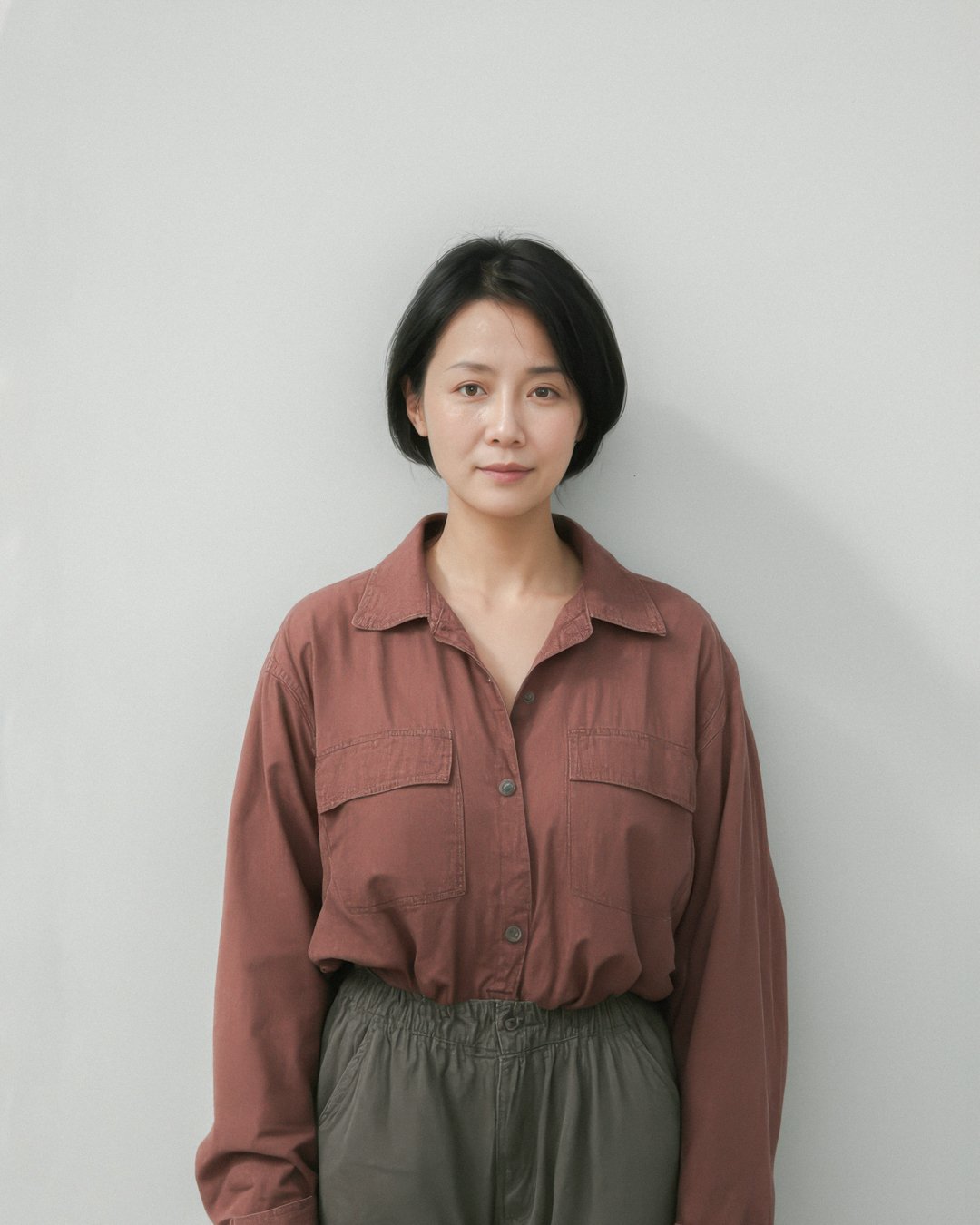
台南市郊外、かつてはサトウキビ畑が広がっていた一帯に、低く広がるガラス温室がいくつも連なる。その一角、朝の5時。冷気がまだ残る空気の中で、彼女は防水ジャケットの襟を立てながら、タブレット片手に静かに歩いていた。農業IoTの制御盤に表示されたグラフを見て、一瞬目を細める。その動作ひとつが、彼女の時間感覚と判断の鋭さを物語っている。
彼女──33歳、台湾・台中の農村出身の女性──は、台南を拠点とする水耕農業スタートアップの共同創業者兼CEOである。温室内の作業員が手を止めることはない。だが、彼女が現れると、言葉にせずとも注意が集中する。誰よりも早く現場に入り、誰よりも細部を見ている人。そういう評価は、意図せず積み上がったものだ。
子どもの頃から、祖父母とともに稲作の手伝いをしてきた。泥に足を取られながらも、一つひとつの苗に注意を向ける癖は、今も変わらない。変わったのは、道具と時間の使い方だけだ。
|2|
作業用のスニーカーは、昨日までの汚れが乾いて白く浮いている。温室内の照明が反射する金属フレームとセンサー群は、彼女の大学時代の研究室を思わせた。国立成功大学で農業工学を学び、アメリカ中西部で農業経済の短期プログラムに参加した頃から、「作物そのものより、それを取り巻く流れの制御」に関心が移っていった。
現在彼女が率いるスタートアップは、小規模でも導入可能な省資源型の水耕システムを地域農家に提供している。IoTによる環境制御、低コストな循環設備、契約栽培による安定供給網。それらの設計と調整を、自ら手を動かしながら行っている。CEOであることと、技術者であること。その境界を引く理由がない、と彼女は言う。
「売れるかどうかより、残るかどうかが大事」と彼女は繰り返す。華やかさのない言葉だが、そこには静かな確信がある。実験は失敗する。設備は壊れる。契約は揺らぐ。それでも、「使い方」に焦点を絞れば、技術も資金も生き延びる。
|3|
台湾の農業は、都市化と高齢化の二重の圧力にさらされている。小規模な家族農業は持続が難しく、若者の多くは都市の職に流れる。だが彼女は、そうした構造の隙間に「小さな持続可能性」を植え込む余地があると信じている。スタートアップという形態を選んだのも、資本の論理と農の論理をつなぐためだった。
彼女の会社では、契約農家に機器を貸与し、収穫物を一定価格で買い取る。過剰な競争ではなく、予測可能な利益と協働関係を築く仕組みだ。また、レストランや学校給食と直接連携することで、中間流通を減らし、農家への分配率を高める。彼女自身がその調整役を担っている。
にもかかわらず、新聞やテレビは彼女を「若き女性起業家」として消費しようとする。そのたびに、彼女の表情はわずかにこわばる。「私が主語ではない感覚」と、彼女は言う。注目が向くのは常に、“女性であること”か、“成功していること”であり、その内側にある技術と構造への眼差しは置き去りにされる。
だからこそ、彼女は今日も早朝から温室に立つ。時間をかけ、手を動かし、数値と土壌のわずかな変化に耳を傾ける。その営みの先に、売れることではなく、残ることを選ぶ農のかたちがある。
――
|1|
In the outskirts of Tainan City, where sugarcane once swayed in the wind, a stretch of low-slung glass greenhouses now catches the early light. At 5 a.m., in the lingering morning chill, she walks quietly with a tablet in hand, her waterproof jacket zipped to the collar. A quick glance at a line graph on an IoT control panel—her eyes narrow slightly. That single movement reflects the acuity of her time-sense and judgement.
She—33 years old, born in a rural area near Taichung—is co-founder and CEO of a hydroponic agriculture startup based in Tainan. Workers in the greenhouse don’t stop what they’re doing, but her presence silently sharpens their focus. She is known not because she asks to be, but because she sees more, and earlier, than anyone else.
She helped her grandparents with rice farming from a young age. The habit of attending to each seedling with care has not changed. Only the tools and the way time is used have evolved.
|2|
The sneakers she wears are flecked with dried soil from the previous day. The metal frames and sensor arrays catching the light inside the greenhouse remind her of her university lab days. After studying agricultural engineering at National Cheng Kung University and participating in a short-term agricultural economics program in the U.S. Midwest, her interest shifted—from crops themselves to the flows surrounding them.
Her startup now provides small-scale, resource-efficient hydroponic systems to local farmers. IoT climate controls, low-cost circulation infrastructure, and contract farming schemes are all designed and fine-tuned by her own hands. She draws no boundary between being a CEO and being a technician.
"What matters is not whether it sells, but whether it stays," she often says. The words are unglamorous, yet firm. Experiments fail. Equipment breaks. Contracts falter. But by focusing on how resources are used, both technology and capital can endure.
|3|
Taiwan’s agriculture is squeezed between urbanization and aging demographics. Small family farms struggle to persist, and many young people drift toward city jobs. Yet she believes there is room to plant "small sustainabilities" in the cracks of this structure. Choosing the startup model was her way of bridging the logic of capital and the logic of farming.
Her company lends equipment to contract farmers and buys their harvest at pre-agreed prices. This is not a competitive scramble but a system that builds predictability and cooperation. By working directly with restaurants and school lunch programs, they reduce middle logistics and raise the revenue share for farmers. She personally handles the coordination.
Nevertheless, media outlets frame her as a "young female entrepreneur." Each time, her expression hardens slightly. “I don’t feel like I’m the subject,” she says. Public attention is drawn not to her work’s structure or the knowledge within, but to her gender—or her success.
That is why, each morning, she returns to the greenhouse. She listens to data and soil, attends to slow changes. And in that rhythm, she builds a form of agriculture that chooses to remain, rather than to sell.
――
The characters and narratives presented here are not based on any real individuals. The setting and depiction are constructed and restructured through research into cultural backgrounds, languages, histories, and contemporary conditions—including archival sources and first-person accounts—and are rendered here as a narrative. However, even when grounded in careful research, I believe that fictionalizing the voice of another carries inherent structural risk. This piece is an attempt to present that risk itself—openly and with accountability.
本作に登場する人物・語りは、実在の個人に基づいたものではありません。 設定・描写にあたっては、人物の文化背景、言語、歴史、現在の社会状況について文献・記録・当事者の語り等を調査し、それらをもとに構成・再構成し、物語として描いています。 ただし、たとえ綿密なリサーチをもとにしていても、“他者の声を仮構すること”には構造的な危うさがあると私は考えています。 この作品は、その危うさごと提出するための試みです。
The characters and narratives presented here are not based on any real individuals. The setting and depiction are constructed and restructured through research into cultural backgrounds, languages, histories, and contemporary conditions—including archival sources and first-person accounts—and are rendered here as a narrative. However, even when grounded in careful research, I believe that fictionalizing the voice of another carries inherent structural risk. This piece is an attempt to present that risk itself—openly and with accountability.