.webp)


.png)


The Unchosen M.09
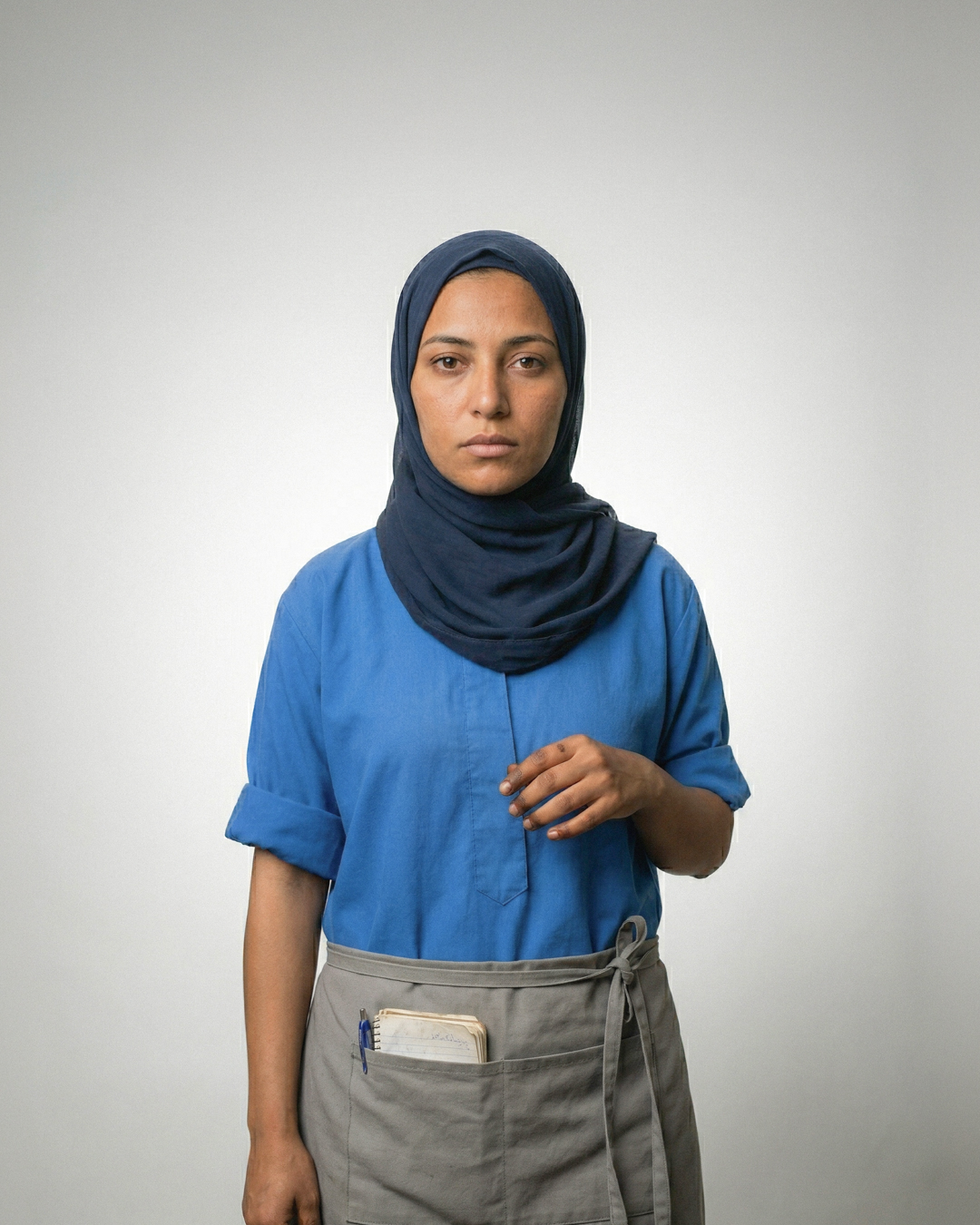
Nour Hassan(ヌール・ハッサン / نور حسن)
(English translation follows below)
朝4時。
まだ暗い。
ファジュルの礼拝を済ませて、母が焼いたアエーシ・バラディを一枚だけ千切る。フールに浸して食べる。砂漠の夜は、拍子抜けするほど冷たい。私はこの冷たさが嫌いじゃない。日が昇るまでの一時間だけ、世界は妙に静かで、この道路は私ひとりのものになる。
店は、父が腰を壊してから始めた。
コンクリートブロックの壁に、トタンの屋根を乗せただけの店。カイロとスエズを結ぶ幹線道路の脇にある。
表に立つのは父と、近所から来ている16歳のハーリドだ。客に紅茶を渡して、愛想をして、椅子を直して、笑うのはあっち側の仕事で、私の場所はその裏——トタン屋根の陰に押し込まれた厨房のほうだ。朝いちばんにガスボンベの栓を開けて、フールの鍋に火を入れて、ターメイヤのタネを丸めて油に落とす。たぶん、私の一日はいつもそこで始まって、ほとんどそこで終わる。
注文は壁越しに飛んでくる。
「シャイ・ジヤーダ・スッカル、イトネーン!」
私はガラスのコップに茶葉と砂糖を入れて、湯を注いで、小さな窓から押し出す。
客の顔は見えない。見えるのは、砂とグリースで汚れた手だけだ。その手がコップを受け取る、一瞬だけ。
その手がどこへ向かうのか、私は知らない。ユーロ圏へ向かうコンテナを引いているのかもしれないし、アフリカへ届くはずの食料支援を運んでいるのかもしれない。だけど、私の前ではただの手だ。熱い紅茶を受け取って、すぐにいなくなる手。
世界はいつも、顔より先に手だけを置いていく。
運河は近い。
近い、という言い方も少し変かもしれない。巨大な船が遠くをぼんやり通るのが見える日がある——その程度の近さだ。
私にとってスエズ運河は、テレビや新聞の中にある名前のほうが本物に近い。運河がいくら稼いで、誰がそれで潤って、どこまで金が落ちてくるのか、そんなことは分からない。分からないままでも店は開くし、油は減るし、パンはなくなる。
ただひとつ分かるのは、運河の収益が落ちたと報じられるようになってから、ハーリドが壁越しに注文を叫ぶ回数も減った、ということだけだ。
28歳。未婚。
叔母たちはそこをちゃんと見てくる。
だけど毎朝フールの鍋に火を入れて、仕入れの電話をかけて、夜の終わりに安い帳面へ売上を書きつけて、この家の一日をどうにか次の日へ渡しているのは私だ。弟がカイロから月に一度送ってくる金と、私が帳面の中でやりくりして残す薄い利鞘。それがこの家の呼吸になっている。
叔母たちはたぶん、そのことを知らない。
表のプラスチック椅子に座っている運転手たちも、もちろん知らない。
日が沈むころ、厨房の火を落とす。
使い終わった鍋を洗って、油の跳ねた壁を布で拭く。
壁の隙間から、最後のトレーラーが砂埃を引きずって走り去るのが見える。轟音だけが大きくて、あとは何も残らない。遠くには、スエズの街の灯りが滲んでいる。あのどこかに、運河を管理する大きなオフィスがあるのだと思う。
たぶん、そこにいる人たちはこの道路を知らない。
この道路を走る運転手が、ここで紅茶を飲むことも知らない。
その紅茶を淹れているのが、壁の向こう側にいる一人の女だということは、もっと知らない。
世界を動かしているものは、たいてい表に出ている。
見えるところにある。
じゃあ、見えないまま動かしているものは、いったい誰が数えるのだろう。
壁一枚ぶんの暗がりにいる私のことを、世界はいつ知るのだろう。
|1|
カイロからスエズへ向かう幹線道路は、まだ明けきらない空の下で低く唸っている。道路の端、アスファルトが砂漠に溶けるその境界に、コンクリートブロックを三方に積み上げただけの小さな構造物がある。トタンの屋根から延びた一本の蛍光灯が、砂埃混じりの空気を青白く照らしている。その構造物の裏側——表の客席からは見えない位置に、もうひとつの空間がある。ガスボンベ、煤けた鍋、積み上げられたガラスのコップ、壁に打ちつけられた木の棚。ヌール・ハッサン(28)は、この狭い厨房でガスの栓を開け、フールの鍋に火を入れるところから一日を始める。ファジュルの礼拝のあとの静けさが、まだ道路の上に残っている。表では父親が、プラスチック椅子を道路側に並べ直している音がする。最初のトレーラーのヘッドライトが、遠くの砂漠の稜線を削るように現れるのは、もう間もなくだ。
|2|
この道路を走るトラックの多くは、スエズ港やアイン・ソフナ港で積み下ろされたコンテナを運んでいる。コンテナの中身は、ヌールには関係のない世界のどこかで生産された何かだ。ヨーロッパの工場に届くアジアの部品かもしれないし、アフリカへ向かう食料支援の小麦粉かもしれない。トラックが止まると、近所から来ている16歳のハーリドが注文を取り、壁越しに叫ぶ。「シャイ・ジヤーダ・スッカル、イトネーン!」。ヌールは茶葉と砂糖をガラスのコップに入れ、湯を注ぎ、壁に開けられた小さな窓からそれを押し出す。彼女が見るのは、コップを受け取る手だけだ。砂とグリースで汚れた太い指。その手がユーロ圏に向かう荷を引いているのか、砂漠の反対側の港を目指しているのか、ヌールには分からないし、知る必要もない。ただ、注文が壁越しに叫ばれるたびに、彼女はコップを満たし、窓から差し出す。一日に何十回も。運転手たちがこの店の紅茶を「このあたりで一番うまい」と言っているのを、ヌールは壁越しに聞いたことがある。だが彼らは、その紅茶を淹れているのが誰なのかを知らない。
|3|
日が落ちると、厨房の小窓から差し込む光の角度が変わる。西に沈む太陽がスエズ運河の方角を赤く染め、時おり、巨大なコンテナ船のシルエットが水平線すれすれの位置にぼんやりと浮かぶのが、壁の隙間から見える日もある。あの船の一隻一隻が、地球のどこかのオフィスビルの画面上で追跡され、最適化され、管理されている。ヌールはそのことをぼんやりと知っている。テレビのニュースで運河の収益が減ったと報じられた翌週から、ハーリドが壁越しに叫ぶ注文の回数が目に見えて減ったからだ。ヌールはガスの火を落とし、煤けた鍋を洗い、油の跳ねた壁を布で拭く。帳面に一日の売上を書き込み、残った小銭を数える。あのどこかの巨大なオフィスの人間は、空調の効いた部屋に座ったまま、この道路が存在することも知らない。この道路を走るトラックの運転手が紅茶を飲むことも知らない。その紅茶がうまいと言われていることも。そしてその紅茶を淹れているのが、壁の向こう側にいる一人の女であることなど——なおさら。
English
4 a.m.
Still dark.
After Fajr, I tear off a single piece of the aish baladi my mother baked. I dip it into ful and eat. Desert nights are colder than people imagine. I do not mind that cold. For one hour, until sunrise, the world goes strangely quiet, and the road feels like it belongs only to me.
The shop began after my father hurt his back.
A few concrete blocks, a tin roof laid over them, and that was enough to call it a shop. It stands by the highway between Cairo and Suez.
Out front, it is my father and Khaled, a sixteen-year-old boy from the neighborhood. They hand tea to customers, straighten chairs, make small talk, smile. My place is behind all that—in the kitchen pressed into the shade beneath the tin roof. I open the gas canister first thing in the morning, light the fire under the ful pot, shape the ta'ameya by hand and drop it into the oil. That is where my day begins, and most days, that is where it ends.
Orders come flying through the wall.
“Shai ziyada sukkar, itnein!”
I put tea leaves and sugar into the glass, pour in the hot water, and push it out through the small window.
I never see the customers’ faces. What I see are hands. Hands darkened with sand and grease. Just for a second, as they take the glass.
I do not know where those hands are headed. Maybe they are pulling containers toward the Eurozone. Maybe they are carrying food aid somewhere farther south in Africa. But here, in front of me, they are only hands. Hands that take hot tea and disappear.
The world is always leaving its hands behind before anything else.
The canal is close.
Though “close” might be the wrong word. On some days, you can make out the blur of enormous ships moving in the distance—that kind of close.
To me, the Suez Canal feels more real as a name on television or in newspapers than as a place. I do not know how much money it makes, who grows richer from it, or how much of it ever falls this far. Life keeps moving whether I know or not. The shop still opens. The oil still runs low. The bread still disappears.
The only thing I do know is this: since people started saying the canal’s revenues were down, Khaled has shouted fewer orders through the wall.
Twenty-eight. Unmarried.
My aunts know how to look directly at that.
But every morning, it is me who lights the fire under the ful. Me who calls the suppliers. Me who writes the day’s sales into a cheap ledger at night and somehow carries this household from one day into the next. My brother sends money from Cairo once a month, and I make what little margin I can inside those pages. That is the rhythm this house breathes by.
My aunts probably do not know that.
The drivers sitting on the plastic chairs out front certainly do not.
By sunset, I turn off the fire in the kitchen.
I wash the used pots. I wipe the oil-spattered wall with a rag.
Through a crack in the wall, I watch the last trailer drag a tail of dust behind it and disappear. The noise is large, and then there is nothing. Far off, the lights of Suez blur into the dark. Somewhere in that glow, I imagine, there is a large office managing the canal.
The people in it probably do not know this road.
They do not know the drivers on this road stop here to drink tea.
And they know even less that the tea is made by a woman standing on the other side of the wall.
What moves the world is usually out in front.
Visible.
Then who keeps count of what moves it while remaining unseen?
Who is meant to notice someone like me, living in a strip of darkness only one wall wide?
|1|
The highway from Cairo to Suez hums low beneath a sky not yet fully light. At the edge of the road, where asphalt dissolves into desert, stands a small structure—cinder blocks stacked on three sides, a single fluorescent tube dangling from a corrugated tin roof, casting a blue-white glow through the dust-laden air. Behind this structure—in a space invisible from the front seating area—is another room. A gas canister, a soot-blackened pot, a stack of glass cups, a wooden shelf nailed to the wall. Nour Hassan (28) begins her day in this narrow kitchen, opening the gas valve and lighting the flame under the ful pot. The stillness that follows the Fajr prayer still lingers over the road. Out front, she can hear her father rearranging the plastic chairs toward the road. It won't be long before the first trailer's headlights appear, carving along the distant ridge of the desert.
|2|
Most of the trucks on this road carry containers loaded or unloaded at the Port of Suez or Ain Sokhna. What's inside them belongs to a world that has nothing to do with Nour. It might be Asian components bound for a European factory, or sacks of flour headed to Africa as food aid. When a truck stops, Khaled—a sixteen-year-old boy from the neighborhood—takes the order and shouts it through the wall. "Shai ziyada sukkar, itnein!" Nour puts tea leaves and sugar into glass cups, pours boiling water, and pushes them through a small window cut into the wall. All she sees is the hand that takes the cup. Thick fingers stained with sand and grease. Whether that hand is hauling freight toward the Eurozone or heading for a port on the other side of the desert, Nour doesn't know, and has no need to. Each time an order is shouted through the wall, she fills a cup and pushes it through the window. Dozens of times a day. She has heard, through the wall, drivers say the tea at this place is "the best around here." But they don't know who brews it.
|3|
When the sun drops, the angle of light through the kitchen window shifts. The setting sun stains the sky red in the direction of the Suez Canal, and some evenings, through a gap in the wall, the massive silhouette of a container ship appears faintly, hovering just above the horizon. Each of those ships is being tracked, optimized, and managed on a screen in an office tower somewhere on Earth. Nour knows this dimly—because the week after the television news reported a decline in canal revenues, the number of times Khaled shouts an order through the wall dropped visibly. Nour kills the gas flame, washes the soot-covered pots, wipes the oil-spattered wall with a rag. She records the day's sales in a ledger and counts the remaining coins. The people in that faraway office—sitting in their air-conditioned rooms—don't know this road exists. They don't know the truck drivers who travel it drink tea. They don't know that tea is said to be the best around. And they certainly don't know it is brewed by a woman on the other side of the wall.
日本語本作に登場する人物・語りは、実在の個人に基づいたものではありません。設定・描写にあたっては、人物の文化背景、言語、歴史、現在の社会状況について文献・記録・当事者の語り等を調査し、それらをもとに構成・再構成し、物語として描いています。ただし、たとえ綿密なリサーチをもとにしていても、"他者の声を仮構すること"には構造的な危うさがあると私は考えています。この作品は、その危うさごと提出するための試みです。
EnglishThe characters and narratives presented here are not based on any real individuals.The setting and depiction are constructed and restructured through research into cultural backgrounds, languages, histories, and contemporary conditions—including archival sources and first-person accounts—and are rendered here as a narrative.However, even when grounded in careful research, I believe that fictionalizing the voice of another carries inherent structural risk.This piece is an attempt to present that risk itself—openly and with accountability.