.webp)


.png)


The Unchosen O.08
Aroha Kereama(アロハ・ケレアマ)
(English translation follows below)
昨夜、鹿のソースを一度捨てた。
19時42分だった。
塩は強くなかった。濃度も正しかった。温度も問題なかった。
ただ、飲み込んだあとに少し苦みが残った。
担当していたマテオは、客には分からないと思うと言った。
たぶん分からなかったと思う。
私が分かったので捨てた。
予約は満席で、最初の肉料理を出すまで二十五分しかなかった。最初から作り直すには短い。だから最初から作り直した。
マテオは何も言わず、別の鍋を出した。
彼はいい料理人だ。
いい料理人だから、捨てたくなかったのだと思う。
料理人は、自分が時間をかけたものを信用したくなる。時間をかけたことと、うまくできたことは別だ。
これは若い頃に何度も言われた。
今は私が言う側になった。
言われる側だったときは、嫌な言葉だと思っていた。
言う側になっても、やはり嫌な言葉だと思う。
厨房には午前8時12分に入った。
納品された魚を見て、肉の温度を確認し、根セロリを二箱返品した。中が乾いていた。
仕入れ業者は、切らなければ分からないと言った。
切ったので分かった。
昼の賄いは鶏肉と米だった。
三口食べたところで、魚の担当から呼ばれた。戻ったときには冷めていたが、全部食べた。
料理人は食べ物を捨てることに慣れていると思われることがある。
実際には逆だと思う。
必要なら鍋一杯のソースを捨てる。火の入りすぎた肉も捨てる。状態の悪い野菜も使わない。
だから、自分が食べるものまで捨てたくない。
冷たい米は冷たい米でしかない。悪い料理ではない。
午後9時を過ぎると、注文が重なった。
テーブル4が魚。
テーブル7が鹿。
テーブル11は乳製品なし。
テーブル3は二十分遅れていた。
新人が鹿の皿にハーブを五枚置いたので、二枚外した。
三枚でも多かったかもしれない。
忙しいときは、余計なものを足す人間と、必要なものを忘れる人間に分かれる。
私は外す方だ。
料理について「芸術ですね」と言われることがある。
たいていは客ではなく、取材に来た人が言う。
私は何と答えればいいのか分からない。
芸術なら、午後11時には洗浄機に入っている。
料理は食べるために作る。
食べられて戻ってこなければ困る。
だから、皿が空で戻ってくるのは正しい。
正しいが、何時間もかけたものが七分でなくなることについて、何も感じないわけではない。
昨夜、鹿の皿はすべて空で戻った。
最初に出した皿は、六分半だった。
最後の一皿は十一分かかった。客が話していたのか、写真を撮っていたのか、肉が冷めたのかは分からない。
厨房には空の皿しか戻ってこない。
客の顔は見えない。
満足したのかどうかも、ほとんど分からない。
それでも、ソースが残っていなければ少し安心する。
午前0時38分に厨房を出た。
家に着いたのは1時17分。
冷蔵庫には、日曜日に市場で買ったトマトが残っていた。買ったときは香りが強かった。昨夜は少し柔らかくなりすぎていた。
料理する気はなかったので、パンとチーズを食べた。
トマトは捨てなかった。
明日ならまだ使えると思った。
たぶん使わない。
食器棚には、以前一緒に暮らしていた人のコーヒーカップが一つ残っている。
ほかのものは片づけた。
カップだけは残した。
欠けているし、特に高いものでもない。
なぜ捨てないのかは分からない。
厨房では、判断に時間をかけない。
出すか、出さないか。
使うか、捨てるか。
今か、三分後か。
迷っている間に肉には火が入り、ソースは煮詰まり、ほかのテーブルが遅れる。
家では、そういう時計がない。
だからトマトもカップも、そのまま残る。
今朝、腕に新しい火傷があることに気づいた。
いつできたのか覚えていない。
痛くはない。
今日は休みだ。
昼まで眠った。
夕方、市場へ行くかもしれない。
冷蔵庫には、まだトマトが三つある。
|1|
パリ8区、シャンゼリゼ通りから一本入った場所に、そのレストランはある。
正面玄関の内側には、厚い絨毯と低い照明、白いクロスを敷いたテーブルが並ぶ。客の声は小さく、皿やグラスが触れ合う音もほとんど聞こえない。
ダイニングの奥にある銀色のスイングドアを越えると、音の密度が変わる。
換気扇。食器洗浄機。バーナー。オーブンの警告音。ステンレス台に置かれる鍋。フランス語、英語、スペイン語が混ざった短い指示。
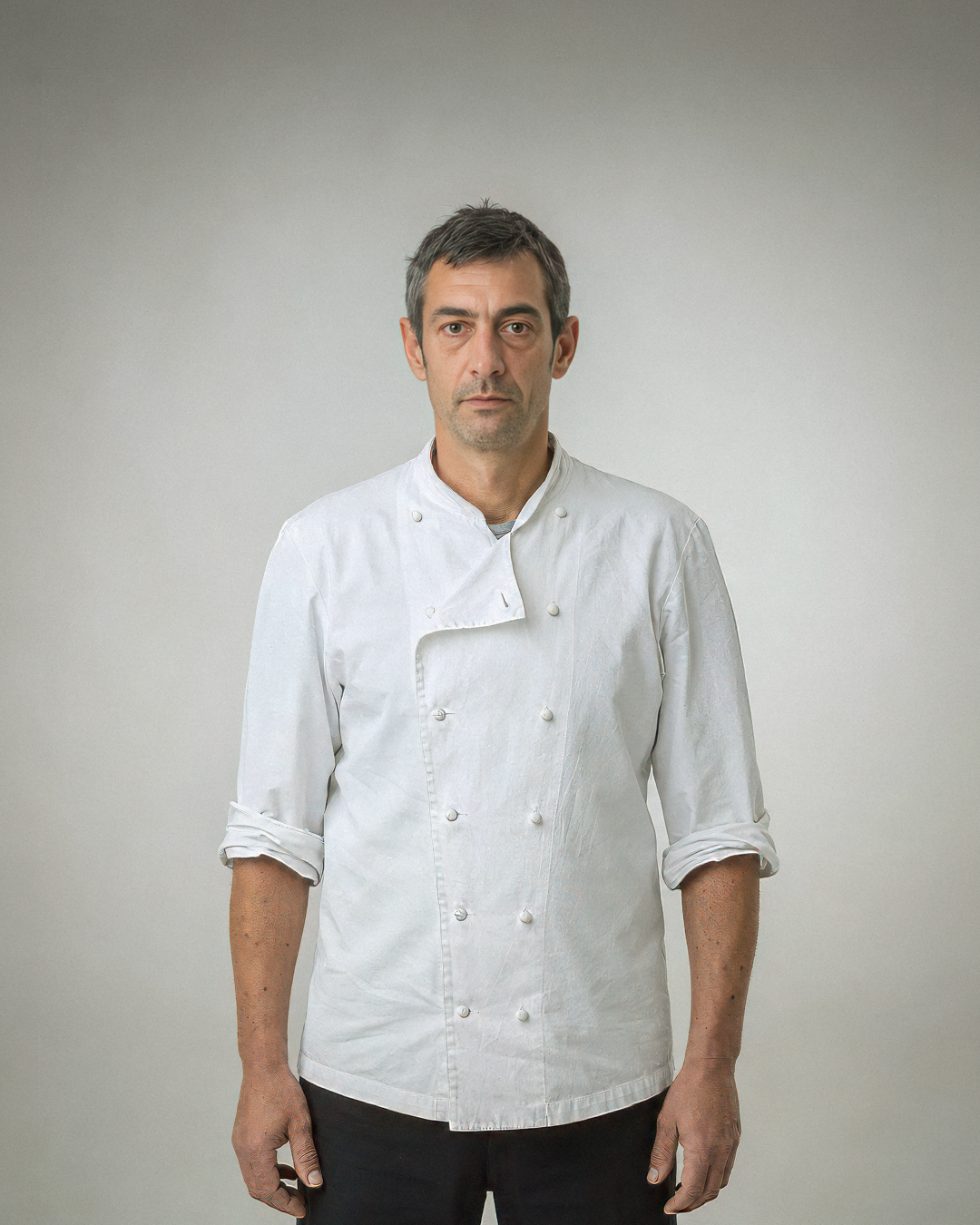
ミシュラン三つ星レストランの副料理長、ジュリアン・デルクロワ、44歳。
エグゼクティブ・シェフが不在の夜は、ジュリアンがパッスに立つ。客席から送られてくる注文を読み、各セクションの進行を確認し、料理を出す順番を決める。
「テーブル12、鹿二つ。魚は七分後」
厨房の数か所から返事が上がる。全員が同時に叫ぶわけではない。必要な人間だけが答える。
ジュリアンは声を荒らげることもあるが、怒鳴ること自体を仕事だとは考えていない。大きな声が必要になるのは、誰かがすでに何かを見落としているときだ。
目の前のステンレス台には、低温で火を入れた鹿肉が並んでいる。
一本を指で押す。表面の弾力を確認し、中心温度の表示を見る。数字は基準内にある。それでも一本だけ、ほかより火が入りすぎていると判断する。
「これは出さない」
担当の料理人が一瞬黙る。
ジュリアンは理由を長く説明しない。別の肉を切るよう指示し、自分はソースの鍋へ戻る。
サービスを止めずに、失敗した一皿だけを流れから外す。それも副料理長の仕事である。
|2|
ジュリアンは午前8時過ぎに厨房へ入る。
納品された食材を確認し、魚や肉の状態を見る。温度と数量はタブレットに記録される。予約客のアレルギー、食事制限、常連客の好みも、厨房の端末に表示されている。
料理は記憶や勘だけで作られているわけではない。
温度管理、発注、原価、勤務表、予約情報。厨房の多くは数字とデータによって管理されている。
しかし、箱から出した根セロリの水分量や、鹿肉の繊維の硬さ、魚の皮に残った張りは、画面だけでは判断できない。
ジュリアンは食材を持ち上げ、指で押し、匂いを嗅ぐ。
厨房で働き始めて二十年以上になる。
前腕には、小さな火傷や切り傷の痕がいくつも残っている。その多くについて、本人はいつ、どの料理で負った傷なのかを覚えていない。
傷を勲章のように見せることもない。
若い料理人が熱い鍋を素手で持とうとすれば止める。包丁の傷を放置して仕事を続けようとすれば、洗って手当てをするよう命じる。
「痛みに耐えることと、仕事ができることは別だ」
そう言いながら、ジュリアン自身は腰の痛みを誰にも言わず、午後の仕込みを続ける。
休憩時間、スタッフは裏口付近に集まり、立ったまま食事をする。
その日の賄いは、余った鶏肉と米だった。
ジュリアンは数口食べたところで呼ばれ、皿をステンレス台の端に置く。戻ってきたときには冷めている。
捨てることはせず、そのまま最後まで食べる。
|3|
午後7時42分。
鹿肉に合わせるソースを味見したジュリアンは、鍋の中身を捨てる。
塩分も濃度も基準から外れていない。だが、最後にわずかな苦みが残る。
担当者は、客には分からないかもしれないと言う。
ジュリアンは否定しない。
「分からないかもしれない。だが、もう分かってしまった」
予約は満席である。作り直す時間はほとんどない。
ジュリアンは別の鍋を火にかけ、フォンを入れ、煮詰め始める。ほかのセクションには予定どおり進めるよう伝える。
午後9時を過ぎると、注文が集中する。
肉、魚、ソース、付け合わせ。別々の場所で進められていた作業が、パッスの前で一枚の皿に集められる。
ジュリアンは皿の縁を拭き、ソースの位置を直す。若い料理人が置いたハーブを一枚だけ外す。
「多い」
それだけ言う。
料理はスイングドアを越え、静かなダイニングへ運ばれていく。
客が誰で、何のために来店したのかを、ジュリアンが知ることは少ない。誕生日、商談、旅行、別れ話。厨房に届くのは、テーブル番号と注文、食事制限、料理を出す時刻だけである。
料理が戻ってくるまでの時間は短い。
空になった皿には、ソースの跡が残る。パンで拭ったように何も残っていないこともある。
ジュリアンは皿を一度見る。
満足したのか、急いでいたのか、写真を撮ったのか、会話に夢中だったのかは分からない。
分かるのは、皿が空で戻ったことだけである。
洗浄機に入れば、その痕跡も数分で消える。
|4|
最後の客が帰った後も、厨房の仕事は終わらない。
食材を包み、日付を書き、冷蔵庫へ戻す。翌朝の仕込みを確認し、清掃の状態を見る。
ジュリアンがレストランを出るのは、午前0時半を過ぎてからになる。
ジュリアンの職場と住まいは、同じパリにありながら、ほとんど別の都市のように離れている。
パリ18区のアパートに着く頃には、午前1時を回っている。
自宅の台所は狭い。鍋は二つ、包丁は一本しかない。レストランでは食材の切り方や皿の温度まで確認するが、自宅では立ったままパンとチーズを食べることが多い。
以前一緒に暮らしていたパートナーが置いていったコーヒーカップが、食器棚に一つ残っている。
別れた後、必要のないものはほとんど処分した。そのカップだけは捨てていない。
理由を聞かれても、ジュリアンは答えられない。
厨房では、使うものと捨てるものをすぐに決められる。
苦いソースは捨てる。火の入りすぎた肉は出さない。余分なハーブは外す。遅れている料理には順番をつける。
だが、仕事以外のことになると、同じようには判断できない。
休日の朝、ジュリアンは市場へ行く。
トマトを持ち上げ、香りを嗅ぎ、魚の目を見る。必要以上に食材を買うこともある。
それを料理せず、冷蔵庫の中で傷ませることもある。
月曜日の朝、ジュリアンは古くなった野菜を捨てる。
その日の午前8時過ぎには、再びレストランの厨房に立っている。
前夜に作られた料理は、もうどこにも残っていない。
残っているのは、次の予約表と、仕込みの一覧、腕に薄く残る新しい火傷だけである。
English
Last night, I threw away the venison sauce once.
It was 7:42 p.m.
The salt was not too strong. The consistency was correct. The temperature was fine.
There was only a slight bitterness after swallowing.
Matteo, who had made it, said the guests probably would not notice.
He was probably right.
I noticed, so I threw it away.
We were fully booked, and there were twenty-five minutes before the first meat course had to leave the kitchen. That is not enough time to begin again.
So we began again.
Matteo said nothing and brought me another pan.
He is a good cook.
That is probably why he did not want to throw it away.
Cooks want to trust the things they have spent time making. Spending time on something and doing it well are not the same thing.
I was told this many times when I was younger.
Now I am the one who says it.
I disliked the sentence when it was said to me.
I still dislike it when I say it to someone else.
I entered the kitchen at 8:12 that morning.
I checked the fish delivery, took the temperatures of the meat, and returned two boxes of celeriac. They were dry inside.
The supplier said there was no way to know without cutting them.
I cut them, so I knew.
The staff meal was chicken and rice.
I had eaten three bites when the fish station called me. It was cold when I returned, but I finished it.
People sometimes imagine that cooks become comfortable with wasting food.
I think the opposite is true.
When necessary, we throw away an entire pan of sauce. We discard meat that has gone too far. We refuse vegetables that are not good enough.
That is why I do not want to throw away the food I eat myself.
Cold rice is only cold rice. It is not bad food.
After nine, the orders began to overlap.
Table four had fish.
Table seven had venison.
Table eleven had no dairy.
Table three was running twenty minutes late.
A new cook placed five herb leaves on the venison, so I removed two.
Three may still have been too many.
When the kitchen becomes busy, people divide into those who add unnecessary things and those who forget necessary ones.
I am someone who removes things.
People sometimes tell me that the food is art.
Usually it is not a guest who says this. It is someone who has come to interview the chef.
I never know what I am supposed to say.
If it is art, it is inside the dishwasher by eleven.
Food is made to be eaten.
If it is not eaten and the plate does not return, we have a problem.
An empty plate is therefore correct.
It is correct, but that does not mean I feel nothing when something that took hours to make disappears in seven minutes.
Every venison plate returned empty last night.
The first came back after six and a half minutes.
The final one took eleven. I do not know whether the guest was talking, taking photographs, or allowing the meat to become cold.
Only empty plates return to the kitchen.
We do not see the guests’ faces.
Most of the time, we do not know whether they were pleased.
Still, I feel slightly relieved when none of the sauce remains.
I left the kitchen at 12:38 a.m.
I arrived home at 1:17.
There were tomatoes in the refrigerator that I had bought at the market on Sunday. They had smelled strong when I bought them. Last night they had become slightly too soft.
I did not want to cook, so I ate bread and cheese.
I did not throw away the tomatoes.
I thought they might still be usable tomorrow.
I probably will not use them.
There is one coffee cup in the cupboard that belonged to the person who used to live with me.
I cleared away everything else.
I kept the cup.
It is chipped and was never expensive.
I do not know why I have not thrown it away.
In the kitchen, decisions cannot take long.
Send it or do not send it.
Use it or discard it.
Now or in three minutes.
While you hesitate, the meat continues cooking, the sauce continues reducing, and another table falls behind.
At home, there is no clock like that.
So the tomatoes and the cup remain.
This morning, I noticed a new burn on my arm.
I do not remember when it happened.
It does not hurt.
Today is my day off.
I slept until noon.
I may go to the market this evening.
There are still three tomatoes in the refrigerator.
|1|
The restaurant is located in the 8th arrondissement of Paris, one street away from the Champs-Élysées.
Beyond the front entrance are thick carpets, low lighting, and tables covered in white linen. Guests speak quietly. Even the contact of plates and glasses is barely audible.
Past a silver swinging door at the back of the dining room, the density of sound changes.
Extractor fans. The dishwasher. Gas burners. Oven alarms. Pans placed on stainless steel. Short instructions delivered in a mixture of French, English, and Spanish.
Julien Delcroix, forty-four, is the sous-chef of the three-star restaurant.
On evenings when the executive chef is absent, Julien stands at the pass. He reads the orders coming from the dining room, checks the progress of each station, and determines when the dishes should leave the kitchen.
“Table twelve. Two venison. Fish in seven minutes.”
Replies come from several parts of the kitchen. Not everyone shouts at once. Only the people who need to answer do so.
Julien sometimes raises his voice, but he does not consider shouting to be part of the profession. A loud voice is usually needed only after someone has already failed to notice something.
Several portions of venison, cooked at a low temperature, lie on the stainless-steel counter in front of him.
He presses one with his finger, checks the resistance, then reads the core-temperature display. The number is within range. Even so, he decides that one portion has gone too far.
“This does not go out.”
The cook responsible is silent for a moment.
Julien does not give a long explanation. He orders another portion to be cut and turns back to the sauce.
Removing one failed plate from the flow without stopping the entire service is also part of the sous-chef’s job.
|2|
Julien enters the kitchen shortly after eight in the morning.
He checks the day’s deliveries and examines the condition of the meat and fish. Temperatures and quantities are entered into a tablet. Allergies, dietary restrictions, and the preferences of returning guests are displayed on a kitchen terminal.
Cooking here is not based on memory and instinct alone.
Temperature control, purchasing, food cost, staffing, reservations. Much of the kitchen is governed by numbers and data.
But the moisture inside a celeriac, the firmness of venison fibers, or the tension left in a fish’s skin cannot be judged entirely from a screen.
Julien lifts the ingredients, presses them with his fingers, and smells them.
He has worked in professional kitchens for more than twenty years.
His forearms carry small burns and cuts. He no longer remembers when most of them happened or which dish he was preparing at the time.
He does not display them as medals.
When a young cook attempts to lift a hot pan without protection, Julien stops them. When someone tries to continue working with an untreated cut, he orders them to wash and dress it.
“Enduring pain and being good at your job are not the same thing.”
He says this while telling no one about the pain in his own lower back and returning to the afternoon preparation.
During the staff break, the cooks gather near the rear entrance and eat standing up.
The staff meal that day is leftover chicken with rice.
Julien is called away after several bites and leaves his plate at the edge of a stainless-steel counter. By the time he returns, it is cold.
He does not throw it away. He finishes it as it is.
|3|
At 7:42 p.m., Julien tastes the sauce intended for the venison and empties the pan.
The salt and consistency are both correct. But a slight bitterness remains at the end.
The cook responsible says the guests may not notice.
Julien does not disagree.
“They may not. But now we have.”
The restaurant is fully booked. There is almost no time to begin again.
Julien places another pan over the heat, adds stock, and starts reducing it. He tells the other stations to continue according to schedule.
After nine, the orders begin to converge.
Meat, fish, sauces, garnishes. Work that has been progressing in separate parts of the kitchen gathers into a single plate at the pass.
Julien wipes the edge of the plate and adjusts the position of the sauce. He removes one leaf placed by a younger cook.
“Too much.”
Nothing more.
The dish passes through the swinging door and enters the quiet dining room.
Julien rarely knows who the guest is or why they have come. A birthday, a business dinner, a holiday, the end of a relationship. What reaches the kitchen is a table number, an order, a dietary restriction, and a time.
The plates return quickly.
A trace of sauce may remain. Sometimes the surface has been wiped completely clean with bread.
Julien looks at each plate once.
He cannot know whether the guest was delighted, in a hurry, taking photographs, or absorbed in conversation.
He knows only that the plate came back empty.
Once it enters the dishwasher, even that evidence disappears within minutes.
|4|
The kitchen does not close when the final guest leaves.
Ingredients are wrapped, dated, and returned to refrigeration. The next morning’s preparation is reviewed. The cleaning is checked.
Julien usually leaves the restaurant after half past midnight.
Although Julien’s workplace and home are both in Paris, they feel as though they belong to almost entirely different cities.
By the time he reaches his apartment in the 18th arrondissement, it is after one.
His kitchen at home is small. He owns two pans and one knife. At the restaurant, he checks the cut of every ingredient and the temperature of every plate. At home, he often eats bread and cheese while standing.
One coffee cup left behind by a former partner remains in the cupboard.
After the relationship ended, Julien disposed of almost everything he no longer needed. He did not throw away the cup.
Asked why, he would not be able to answer.
In the kitchen, he decides immediately what can be used and what must be discarded.
A bitter sauce is thrown away. Overcooked meat does not leave the pass. An unnecessary herb is removed. A delayed dish is given a new position in the order of service.
Outside work, he cannot make decisions in the same way.
On his days off, Julien goes to the market.
He lifts tomatoes, smells them, and checks the eyes of the fish. Sometimes he buys more than he needs.
Sometimes he does not cook any of it and allows it to deteriorate in the refrigerator.
On Monday morning, he throws the old vegetables away.
Shortly after eight, he is standing in the restaurant kitchen again.
Nothing made the previous evening remains.
There is only the next reservation list, the preparation schedule, and a new burn fading on his arm.
日本語本作に登場する人物・語りは、実在の個人に基づいたものではありません。設定・描写にあたっては、人物の文化背景、言語、歴史、現在の社会状況について文献・記録・当事者の語り等を調査し、それらをもとに構成・再構成し、物語として描いています。ただし、たとえ綿密なリサーチをもとにしていても、"他者の声を仮構すること"には構造的な危うさがあると私は考えています。この作品は、その危うさごと提出するための試みです。
EnglishThe characters and narratives presented here are not based on any real individuals.The setting and depiction are constructed and restructured through research into cultural backgrounds, languages, histories, and contemporary conditions—including archival sources and first-person accounts—and are rendered here as a narrative.However, even when grounded in careful research, I believe that fictionalizing the voice of another carries inherent structural risk.This piece is an attempt to present that risk itself—openly and with accountability.