.webp)


.png)


The Unchosen E.46
Aleks "Sasha" Kowalski(アレクス・"サーシャ"・コワルスキ)
(English translation follows below)
今日は雪の足音を録った。
本物の雪は使っていない。スタジオの冷凍庫に雪は入らないし、入ったとしても、溶ける音しか録れないと思う。
革の袋にコーンスターチを入れて踏む。これだけだと乾きすぎていて、古いゲームの足音みたいになる。袋の下に毛布を一枚敷いて、靴を少し横に滑らせると、それらしくなった。
画面の騎士はたぶん百キロくらいある。鎧を着ているので。
私は六十キロもない。
それでも、音だけなら私の方が重くできる。
同じ足音を二十回くらい録った。歩く音、走る音、止まる音。左足と右足。速いものと遅いもの。全部に番号を付ける。
名前を付けるより番号の方が楽だ。
父も、物に名前を付けなかった。
家にはネジや抵抗器や、何に使うのか分からない金属の部品が入った箱がいくつもあった。箱には「小」「大」「まだ使える」などと書かれていた。「まだ使える」は分類としてかなり曖昧だと思う。
父は国営企業で機械を直していた。
私が小さい頃には、その仕事はもう以前ほどうまくいっていなかった。会社の名前が変わり、人が減り、父は家にいる時間が増えた。
何があったのか聞いたことはない。
父は仕事の話をしなかったし、私は子どもだったので、家にいるならラジオを直してもらえると思っていた。
今、スタジオでケーブルが壊れると、私は新しいものを注文する前に切って中を見る。
同僚には、買った方が早いと言われる。
たぶん正しい。
でも、中を見ないで捨てるのは気持ちが悪い。
母は教会でオルガンを弾いていた。
子どもの頃、ピアノを間違えると、別の部屋から「違う」と言われた。どこが違うのかは教えてくれないこともあった。もう一度弾けば、自分で分かると思っていたのかもしれない。
私は今でも、同じ音を何度も聞く。
仕事だからというのもある。でも、正しい音がどれなのかは、だいたい最初から分かっている。説明できるまでに時間がかかるだけだ。
母は、私がゲームの音を作っていることは知っている。
どういう音かは、あまり知らない。
前に電話で「今日は人の頭が割れる音を録った」と言ったら、しばらく黙っていた。実際に使ったのはキャベツだったと言うと、少し安心したようだった。
なぜ安心するのかはよく分からない。
キャベツには悪いと思う。
「サーシャ」という名前は自分で選んだ。
ポーランド語で話していると、名前を言った時点で、話す相手が私についていろいろ決める。それを少し遅らせたかった。
サーシャなら簡単だと思った。
簡単ではなかった。
以前は、男性の名前なのか女性の名前なのかと聞かれた。
今は、ロシア人なのかウクライナ人なのかと聞かれることが多い。
どちらでもないと答えると、ではなぜその名前なのかと聞かれる。
説明を減らすために選んだ名前なのに、前より説明が長くなった。
最近は、仕事で必要なとき以外は訂正しない。
間違ったままでも、特に困らないことは多い。
音も似ている。
ゲームの中で雪に聞こえているものが、本当はコーンスターチでも、プレイヤーは困らない。骨が折れたように聞こえるものがセロリでも、物語はそのまま進む。
本物を使うことと、本物に聞こえることは違う。
どちらが正しいのかは、あまり考えない。
今日は録音室から出たあと、路面電車の音がいつもより大きく感じた。
ノイズキャンセリングをオンにしたけれど、線路から伝わる振動は消えなかった。耳で聞く音ではないからだと思う。
家に帰って、今日のファイルをもう一度聞いた。
五番目のテイクがいちばん良い。
少し軽いので、明日は袋に小麦粉を足してみる。
|1|
ポーランド、ワルシャワのプラガ地区。古い工場を改装したインディーゲームスタジオの奥に、窓のない小さな録音室がある。
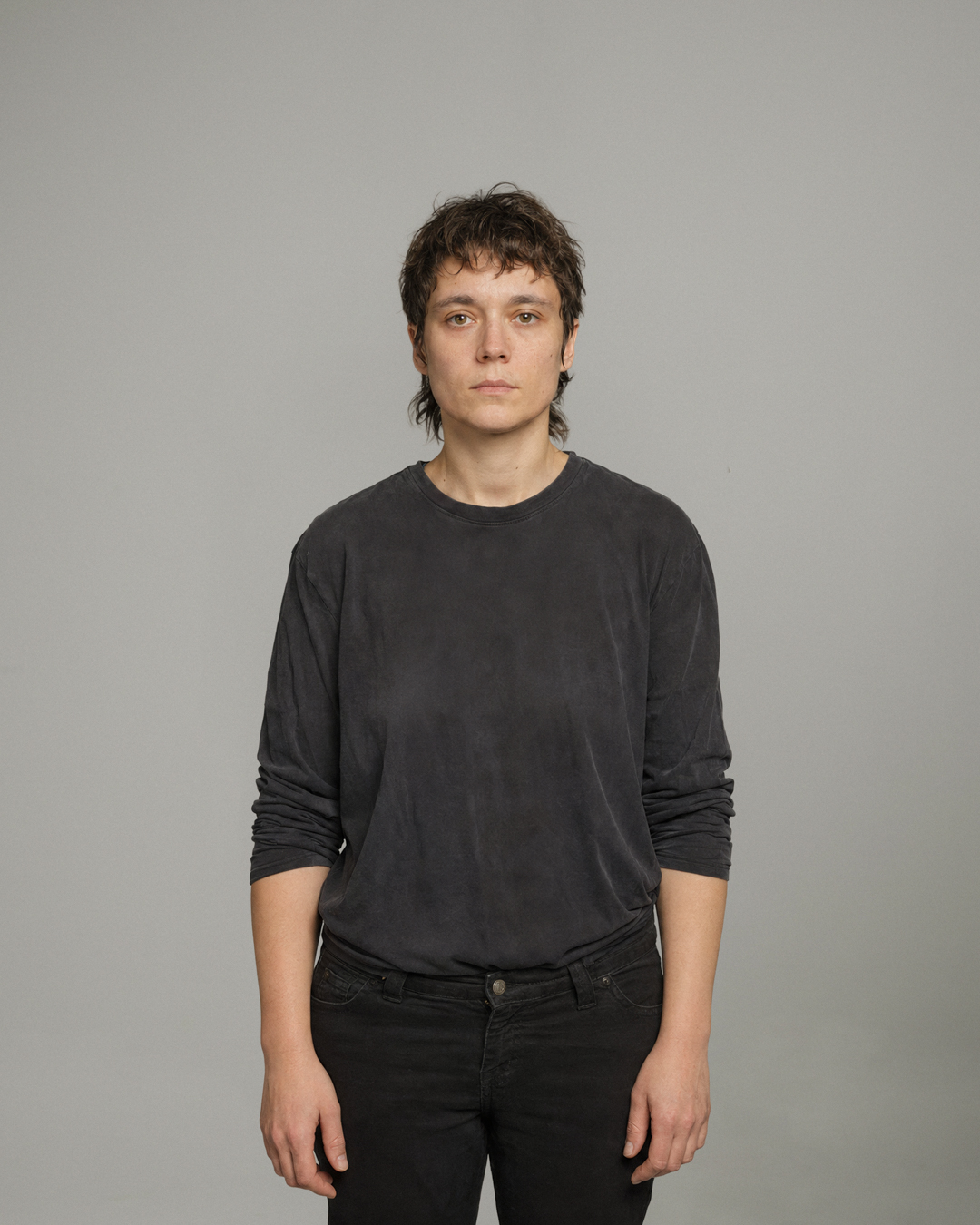
アレクス・“サーシャ”・コワルスキ、29歳。サウンドデザイナー兼フォーリーアーティスト。
マイクの前には、革袋に詰めたコーンスターチが置かれている。サーシャは画面に表示された雪上歩行の参考映像を見ながら、袋を靴底で踏む。速さと重さを少しずつ変え、同じ動作を何度も繰り返す。
録音された短い音は、後にゲームエンジンの中で、人物の動きや地面の状態に応じて呼び出される。ひとつの足音だけでも、歩く、走る、止まる、滑る、着地するといった複数の動作が必要になる。
画面の中にあるのは、ポリゴンとコードで構成された身体だ。そこには重さも摩擦もない。サーシャが録音した足音が加わったとき、初めてその身体が地面に触れているように感じられる。
母は、クラクフのカトリック教会でオルガンを弾いていた。幼い頃からピアノと音程を教え、音を正しい位置に置くことを求めた。
サーシャ自身は信仰を持っていない。現在つくっているのは、祈りのための音楽ではなく、武器や鎧、怪物、崩れる建物の音だ。
それでも、録音された波形の立ち上がりを確認し、不要なノイズを切り、音と音の間隔を整える作業には、母から教わった規律が残っている。
|2|
録音の途中で、マイクから断続的なノイズが出る。
サーシャはケーブルを交換するのではなく、工具箱から小さなナイフと半田ごてを取り出す。被膜を剥がし、断線しかけた箇所を探す。作業に迷いはない。
父は国営企業で、電気設備や機械の保守に携わっていた。幼いサーシャにラジオの裏蓋を開けて見せ、信号がどの線を通り、接触不良がどこで起きるのかを教えた。
1989年以降、ポーランドの国営企業は民営化や再編の波にさらされた。父の職場も縮小され、そこで評価されていた知識や経験は、以前と同じようには必要とされなくなった。
父は次第に仕事の話をしなくなった。
サーシャも、父から何を受け継いだのかを自分から説明することはない。ただ、スタジオには自分で修理したケーブルや、用途の分からない古い部品が箱に分けて保管されている。
新しい機材を購入できる場合でも、まず蓋を開け、故障している場所を探す。
その手つきは、父がラジオの内部を指でたどっていたときのものとよく似ている。
|3|
録音を終えると、サーシャは重いヘッドホンを外し、防音扉を開ける。
室内では、ほぼすべての音を選ぶことができる。不要な音は消し、遅れた音は動かし、失敗した録音は最初からやり直せる。
扉の外では、路面電車の車輪が軋み、車のクラクションや工事音が重なっている。
プラガ地区には、古い集合住宅や修理工場と、改装された倉庫、オフィス、バーが混在している。家賃は上がり続けているが、中心部よりはまだ安い。ゲームや音楽、デザインの仕事をする若い人々が集まり、テクノクラブや小規模なクィアイベントも点在している。
サーシャはクラクフで育ち、仕事を得たことをきっかけにワルシャワへ移った。産業の中心に近づくための移動であると同時に、出身地では得にくかった匿名性を求めた移動でもあった。
「サーシャ」は、名詞や形容詞だけでなく、人の名前や姓まで強く性別化されるポーランド語から距離を取るために、自分で選んだ呼び名だ。
選んだのは2022年より前だった。
しかしロシアによるウクライナ侵攻以降、その名前を聞いた人から、ロシアやウクライナとの関係を尋ねられることが増えた。ジェンダーについての説明を減らすために選んだ名前が、今度は国籍や政治についての説明を要求するようになった。
サーシャは積極的には訂正しない。
質問されたときだけ短く答え、それ以上は話さない。
|4|
ポーランドのゲーム産業は、国内外で広く知られる作品を生み出し、ヨーロッパにおける主要なゲーム開発拠点の一つとなっている。
その一方で、制作現場では納期前の長時間労働や、プロジェクト単位の不安定な雇用も珍しくない。作品が世界的に評価されても、そこで使われている一つひとつの足音や衣擦れを誰がつくったのかが、プレイヤーに意識されることはほとんどない。
むしろ、音が意識されないことが仕事の成功になる。
足音が重すぎれば、人物の身体が鈍く感じられる。軽すぎれば、鎧を着ているようには聞こえない。土、木、石、雪、金属。それぞれの表面に合う音を、サーシャは身近な素材から探す。
砂利を踏む。布を擦る。古い鞄を落とす。キャベツやセロリを折る。
高度なゲームエンジンや画像生成技術によって構築されるデジタル空間も、こうした小さな身体的作業に支えられている。
夕方、サーシャは録音した音をファイルに分け、番号を付ける。名前ではなく、動作、素材、速度、重量によって分類する。
画面の中では、存在しない人物が雪の上を歩き始める。
その歩行を成立させている身体は、画面には映らない。
English
Snow footsteps are not made by recording snow.
Real snow is surprisingly unhelpful in front of a microphone. Sometimes it is too light. Sometimes too wet. Sometimes it just sounds like water.
Today I stepped on cornstarch inside a leather pouch. It sounded too thin, so I placed an old piece of fabric underneath it. Now it sounds like a person in armor walking through snow.
At least, nobody should think it sounds wrong.
In sound work, the best result is often the one nobody notices.
My father was the kind of person who opened the casing before switching a broken object on.
A radio, a fan, anything. He looked inside first. It might only be a loose wire.
I do the same.
At the studio, people say it would be quicker to buy a new cable. But if I know where the break is, repairing it is quicker. I do not know exactly where my father learned to work that way. It was probably just normal then.
By the time I was a child, his work had already begun to disappear.
He rarely explained what had happened. The company changed. The people it needed changed. Things he knew how to do were suddenly treated as though they no longer mattered.
Inside a cable, however, the signal still moves in much the same way.
My mother played the organ in a church.
If I played a wrong note, she could hear it from another room. Not only the pitch. She could tell if I entered slightly early or lifted my finger too late.
I do not believe in God.
I have never asked what she thinks about that. She does not ask many questions about the sounds of breaking bones I make for games.
That is probably better.
I chose the name Sasha.
In Polish, introducing yourself often means being placed into a gender before anything else is known about you. I thought Sasha would require less explanation.
It did not.
Since 2022, more people have asked whether I am Russian or Ukrainian. When I say neither, they ask why I have the name.
I chose it to make explanations shorter. The explanations are now longer.
These days, unless it matters, I do not correct people.
People attach meaning to whatever they hear. Sound work is the same. Celery becomes a broken bone when it is placed under the right image. Cornstarch becomes snow.
What the sound was made from is not especially important.
Inside the booth, almost everything can be done again.
Noise can be removed. A sound can be moved slightly earlier. If I do not like a recording, I can find another material and start over.
Outside, it does not work that way.
The trams, construction, and other people’s voices do not stop for me. Nor can I erase the period when parts of this country announced that people like me did not belong in them.
That does not mean I want to speak about it every day.
When I finish work, I put on noise-canceling earphones.
They do not remove everything. Low vibrations remain. A nearby horn still gets through.
That is enough.
Not everything has to be removed.
Not everything has to be named immediately.
A sound in the middle of a mix does not yet have to decide what it will become.
|1|
The Praga district of Warsaw, Poland. At the back of an indie game studio housed in a converted factory is a small recording room with no windows.
Aleks “Sasha” Kowalski, twenty-nine, works there as a sound designer and Foley artist.
A leather pouch filled with cornstarch lies in front of the microphone. Watching reference footage of a character walking through snow, Sasha steps on the pouch. They repeat the movement, altering the speed and weight each time.
The short recordings will later be placed inside a game engine and triggered according to the character’s movement and the surface beneath them. A single set of footsteps may require separate sounds for walking, running, stopping, sliding, and landing.
The body on the screen is made of polygons and code. It has no physical weight or friction of its own. Only when Sasha’s recordings are added does it begin to feel as though the body is touching the ground.
Sasha’s mother played the organ at a Catholic church in Kraków. She taught Sasha piano and pitch from an early age and expected every sound to be placed correctly.
Sasha no longer has a religious faith. The sounds they make now are not intended for prayer, but for weapons, armor, monsters, and collapsing buildings.
Still, something of their mother’s discipline remains in the way Sasha studies the attack of a waveform, removes unwanted noise, and adjusts the space between one sound and the next.
|2|
During a recording session, the microphone begins producing an intermittent crackle.
Instead of replacing the cable, Sasha takes a small knife and soldering iron from a toolbox. They strip back the insulation and search for the damaged connection. Their hands move without hesitation.
Sasha’s father worked at a state-owned enterprise, maintaining electrical and mechanical equipment. When Sasha was young, he opened the back of a radio and showed them how a signal moves through a wire and where a faulty contact might occur.
After 1989, Poland’s state-owned industries underwent rapid privatization and restructuring. Sasha’s father’s workplace was reduced, and the knowledge that had once given him professional value was no longer rewarded in the same way.
Over time, he stopped talking about his work.
Sasha does not describe what they may have inherited from him. But the studio contains cables they have repaired themselves and boxes of old components whose future use is uncertain.
Even when new equipment could be purchased, Sasha first opens the casing and looks for the fault.
The movement of their hands resembles the way their father once traced the inside of a radio with his finger.
|3|
When the recording is finished, Sasha removes the heavy headphones and opens the soundproof door.
Inside the room, nearly every sound can be chosen. Unwanted frequencies can be removed. A late sound can be shifted. A failed recording can be started again.
Outside, tram wheels grind against the tracks. Car horns and construction noise overlap.
In Praga, old apartment blocks and repair shops stand beside renovated warehouses, offices, and bars. Rents continue to rise, though the district remains cheaper than central Warsaw. Young people working in games, music, and design have moved into the area, along with small techno clubs and queer events.
Sasha grew up in Kraków and moved to Warsaw after finding work there. It was a move toward the center of the industry, but also toward a kind of anonymity that had been harder to find at home.
“Sasha” is a name they chose to create distance from a Polish language that strongly genders not only nouns and adjectives, but names and surnames as well.
They chose it before 2022.
Since Russia’s invasion of Ukraine, however, people hearing the name have increasingly asked whether Sasha has a connection to Russia or Ukraine. A name chosen to reduce explanations about gender began to demand a different set of explanations about nationality and politics.
Sasha rarely corrects anyone without being asked.
When a question comes, they answer briefly and leave it there.
|4|
Poland’s game industry has produced internationally recognized titles and has become one of Europe’s major centers of game development.
At the same time, long working hours near deadlines and unstable project-based employment remain common parts of production. Even when a game receives global attention, players rarely consider who created an individual footstep or the rustle of a piece of clothing.
In many cases, not being noticed is the measure of success.
If a footstep is too heavy, the body will feel slow. If it is too light, the character will not sound as though they are wearing armor. Soil, wood, stone, snow, metal: Sasha searches for a material that can suggest each surface.
They step on gravel. Rub pieces of cloth together. Drop an old bag. Snap cabbage or celery.
Digital environments built through advanced game engines and image technologies are also supported by these small acts of physical labor.
In the evening, Sasha divides the day’s recordings into files and assigns each one a number. They classify them not by name, but by movement, material, speed, and weight.
On the screen, a person who does not exist begins to walk across snow.
The body that makes that walk believable is never seen.
日本語本作に登場する人物・語りは、実在の個人に基づいたものではありません。設定・描写にあたっては、人物の文化背景、言語、歴史、現在の社会状況について文献・記録・当事者の語り等を調査し、それらをもとに構成・再構成し、物語として描いています。ただし、たとえ綿密なリサーチをもとにしていても、"他者の声を仮構すること"には構造的な危うさがあると私は考えています。この作品は、その危うさごと提出するための試みです。
EnglishThe characters and narratives presented here are not based on any real individuals.The setting and depiction are constructed and restructured through research into cultural backgrounds, languages, histories, and contemporary conditions—including archival sources and first-person accounts—and are rendered here as a narrative.However, even when grounded in careful research, I believe that fictionalizing the voice of another carries inherent structural risk.This piece is an attempt to present that risk itself—openly and with accountability.