.webp)


.png)


The Unchosen に捧ぐ
E19 セーヌ=サン=ドニのチュニジア系女子高生
(English follows below)
|1|境界線の内側で
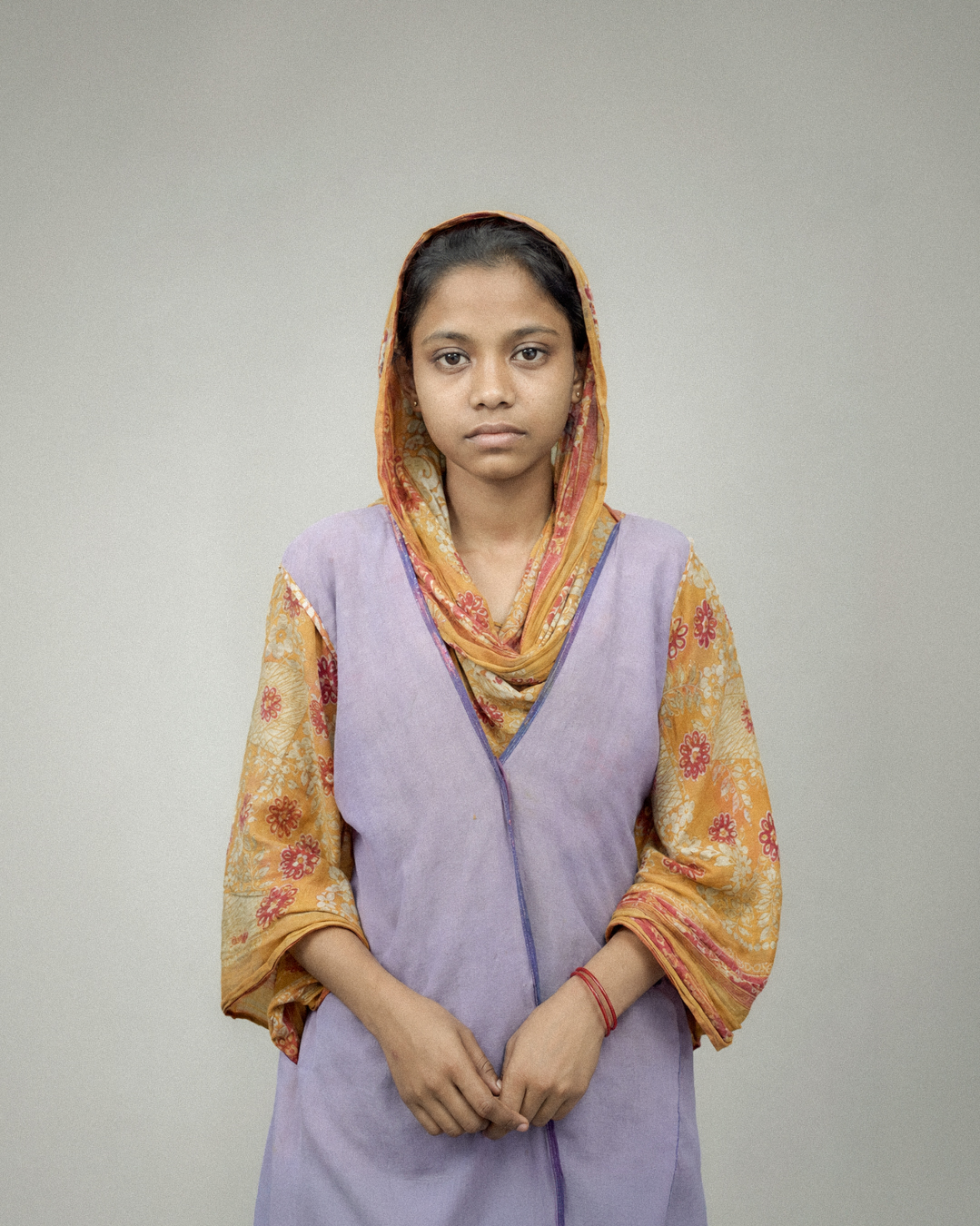
彼女の朝は、アザーンの録音が流れるスマートフォンのアラームで始まる。ベッドの脇には、黒いジャージとナイキのスニーカー、そして紺色のヒジャブが整然と置かれている。セーヌ=サン=ドニ県の郊外都市、サン=ドニの団地で育った彼女にとって、この装いは日常の制服のようなものだ。ヒジャブは信仰の証ではなく、むしろ家庭や地域社会との摩擦を避けるための「非衝突的戦略」として機能している。
学校では、フランス語が主な言語であり、教育や制度のコードとして使われている。しかし、家庭内ではアラビア語が主に用いられ、フランス語との混在が常態化している。このコードスイッチの中で、彼女は「どちらにも本当には属さない」という感覚を抱えている。
|2|見えない境界を越えて
彼女が通う地元の公立高校では、制度上は“完全に接続された市民”として扱われている。しかし、文化的・民族的背景に起因する違和感や隔たりが常に存在する。教師や制度側から“代表させられる”ような眼差しに対して、彼女は疲労感を覚えている。
ヒジャブを着用しているが、それは強い信仰に基づく選択ではない。むしろ、家庭や地域社会との摩擦を避けるための「非衝突的戦略」として機能している。周囲には脱ヒジャブの友人もいるが、自分が脱ぐことは“立場を説明する責任”を強いられると感じており、それを望まない。
服装全体はストリートウェア的な混合スタイル(黒いジャージ上下、ナイキスニーカーなど)で、都市的匿名性を纏うが、ヒジャブ一枚によってその匿名性は制度からは否認される。
|3|構造の中の彼女
セーヌ=サン=ドニ県は、フランス本土で最も移民の割合が高い地域であり、2015年のデータでは移民が人口の約30%を占めている 。この地域では、若者の失業率も高く、2023年のデータでは15〜24歳の失業率が20.3%に達している 。ウィキペディアinsee.fr
フランスでは、2004年に公立学校での宗教的象徴の着用が禁止され、2023年にはアバヤの着用も禁止された 。これらの政策は、特にイスラム教徒の女性に影響を与えており、彼女のような若者にとっては、個人の信仰と公共の規範との間での葛藤を生み出している。Hyphen+1sites.uab.edu+1
彼女のような若者は、制度的には“完全に見える”社会の中で、文化的には“選びきれない”選択の中に生きている。ヒジャブは、信仰の証ではなく、「語らずにいるための装い」であり、彼女の姿は、自由と表象の関係が錯綜する空間に現れる、沈黙のかたちである。
|4|沈黙のかたち
彼女の存在は、フランス社会における多文化共生の現実と課題を象徴している。彼女のような若者が直面する制度的・文化的な壁は、個人の選択や信仰の自由に深く関わっている。彼女の沈黙は、語られない声として、社会の中での見えない境界を浮かび上がらせている。

E19|Standing in Silence
A 17-Year-Old Tunisian-French Girl in Seine-Saint-Denis
|1|Inside the Lines
Her mornings begin with the azan echoing from a smartphone alarm.
Next to her bed lie a black tracksuit, Nike sneakers, and a neatly folded navy hijab.
In a housing complex of Seine-Saint-Denis, this outfit has become her everyday uniform.
The hijab is not a declaration of faith.
It serves instead as a “non-confrontational strategy” to avoid friction within her family and community.
At school, French is the main language—used in education, regulations, and tests.
But at home, Arabic dominates daily conversations.
Living in this code-switching realm, she feels she truly belongs to neither world.
|2|Crossing Invisible Borders
At her local public high school, she is treated—on paper—as a fully integrated citizen.
Yet a cultural and ethnic dissonance remains.
She grows weary of being made to “represent” something in the eyes of teachers and institutions.
She wears the hijab not out of deep religious belief, but to avoid the exhausting need to explain herself.
Among her friends, some have stopped wearing it—but she fears that removing it would mean facing questions she doesn’t want to answer.
Her clothing blends into a streetwear style—black tracksuits, Nike sneakers—a kind of urban anonymity.
Yet the hijab alone strips her of that invisibility in the eyes of the state.
|3|Her Place in the System
Seine-Saint-Denis has one of the highest proportions of immigrant residents in mainland France.
In 2008, over 60.5% of its youth under 18 were of foreign origin.
Youth unemployment remains a pressing issue; in 2019, the jobless rate for 18-24 year olds reached 28%*.
France's secular policies have a deep impact on Muslim girls like her.
Since 2004, conspicuous religious symbols have been banned in public schools.
In 2023, the government extended this to abayas.
She lives within a system that sees her as "fully visible" administratively,
but "unresolved" in cultural terms.
The hijab is not a sign of devotion, but a way to remain unspoken—
a silent form in a space where freedom and representation collide.
|4|The Shape of Silence
She stands as a symbol of France’s fraught vision of multicultural coexistence.
The boundaries she navigates—religious, linguistic, institutional—are often invisible, yet deeply felt.
Her silence is not absence.
It is the shape of a voice denied listening.
“This cloth does not hide her.
But the system that sees it refuses to hear her voice.”
本作に登場する人物・語りは、実在の個人に基づいたものではありません。
設定・描写にあたっては、人物の文化背景、言語、歴史、現在の社会状況について文献・記録・当事者の語り等を調査し、
それらをもとに構成・再構成し、物語として描いています。
ただし、たとえ綿密なリサーチをもとにしていても、“他者の声を仮構すること”には構造的な危うさがあると私は考えています。
この作品は、その危うさごと提出するための試みです。
he characters and narratives presented here are not based on any real individuals.
The setting and depiction are constructed and restructured through research into cultural backgrounds, languages, histories, and contemporary conditions—
including archival sources and first-person accounts—
and are rendered here as a narrative.
However, even when grounded in careful research, I believe that fictionalizing the voice of another carries inherent structural risk.
This piece is an attempt to present that risk itself—openly and with accountability.