.webp)


.png)


The Unchosen F.16
Amadou Faye(アマドゥ・ファイ)
(English translation follows below)
金を触ったあとの手は、少し黒くなる。
紙幣のせいなのか、砂のせいなのか、排気ガスのせいなのかはわからない。たぶん全部だろうな。家に帰って石鹸で洗うと、水が少し茶色になる。その水を見て、今日もいろんな人の金が俺の手を通っていったのだと思う。
俺の仕事は、金を動かすことだ。
そう言うと、大きな仕事に聞こえるかもしれない。実際、画面の上では大きな金額が動いている。俺のスマートフォンには数字が入り、数字が出ていく。だが、俺の店は大きくない。パルセル・アサニエの交差点にある、青く塗られた小さな木の箱だ。
中に椅子を置き、机を置き、金庫を置き、俺が座ると、もうほとんど余白はない。暑い日は背中にベストが張りつく。風が吹くと砂が入る。カー・ラピッドが通るたびに、黒い煙が小窓から入ってくる。
そんな場所に、人は来る。
市場の女たち。バイクタクシーの運転手。学生。村に金を送る男。ヨーロッパからの送金を受け取る母親。みんな、番号と金額を言う。俺は聞き返す。もう一度確認する。急いでいる客は皆嫌な顔をするが、それでも確認する。
金は、間違えたら戻すのが難しい。
電話番号の一桁は、小さく見えて、とても重い。
前に一度、若い男に怒鳴られたことがある。
「何回聞くんだ。早くしてくれ」
そう言われて、俺も少し腹が立った。でも結局、聞き返した。すると最後の二桁が、最初に言った番号と違っていた。
男は少し黙って、それから小さな声で「そうだ、それだった」と言った。
そういうことなんだ。
俺の仕事は、速くすることではない。
もちろん速いほうがいい。列ができれば客は苛立つし、暑い中で待たされるのは誰でも嫌だろうな。けれど、速さよりも先に、間違えないことが大切なんだよ。俺が一桁間違えれば、誰かの米代が別の人間の電話に入る。誰かの薬代が、知らない町へ行く。
画面の中では、金はきれいだ。
数字はまっすぐ並び、送信ボタンを押せば小さな音が鳴る。入金、出金、送金、確認。完了。スマートフォンの中では、全部が、速くて、軽い。
でも、目の前にある紙幣は軽くない。
魚の匂いがする紙幣がある。汗で湿った紙幣がある。何度も折られて、角が柔らかくなった紙幣がある。市場で野菜を売った女が握っていた金。バイクで一日走った男がポケットから出す金。ヨーロッパから届いた送金を受け取る母親が、両手で数え直す金。
俺はその紙幣を数える。
一枚、二枚、三枚。
指は少し汚れる。
それでも、俺はこの汚れを嫌いではない。
きれいな金というものを、俺はあまり信用していない。少なくとも、俺の小窓に来る金は、いつも何かの匂いがする。魚、汗、香水、砂、古い財布の革。金には、それを持ってきた人の一日がついている。さまざまな場所を通ってくる匂いだ。
それが画面の中に入ると、ただの数字になる。
二万セーファーフラン。
五千セーファーフラン。
十五万セーファーフラン。
数字になると、みんな同じ顔をする。
だが俺は、同じではないことを知っている。
ある女は、ジュルベルにいる母親へ送る。
ある男は、村の弟の学費を払う。
ある母親は、スペインにいる息子からの金を受け取りに来る。
ある若者は、電気代を払うために残高を確認する。
画面では同じ送金でも、それぞれ中身が違う。
だから俺は、客の話を聞きすぎないようにしている。だが、まったく聞かないわけにもいかない。金のことは、人の顔に出る。届くはずの送金が届いていない人の顔。今日中に現金が必要な人の声。手数料を聞いて、少しだけ目を細める人。
会社のポスターには、便利だと書いてある。速い、安全、簡単。たしかに嘘ではない。銀行口座を持っていなくても金を受け取れる。遠くの家族へ、数秒で送れる。俺の母親の世代からすれば、これは本当に大きなことだと思う。
安全。
画面の中の金は、たぶん安全だ。
でも、俺の金庫はそうではない。
俺の店には、現金が必要だ。電子マネーだけでは商売にならない。現金がなければ、客は出金できない。電子マネーがなければ、客は入金できない。どちらも必要で、どちらかが多すぎても少なすぎても商売にならない。
夕方、店を閉める前になると、俺は少し周りを見るようになる。さっきから同じバイクが停まっていないか。必要以上に小窓を見ている男はいないか。ほとんどの日は何も起きない。だが、何も起きなかった日を作るために、ずっと気をつけている。
家に帰ると、娘が寝ていることが多い。
靴が小さくなってきたな、と思う。妻にもそう言われた。今日の手数料を計算しながら、いつ買いに行けるか考える。俺の画面を通る金額だけ見れば、娘の靴くらい簡単に買えそうに見えるかもしれない。でも、通る金と残る金は違う。
俺の端末を、大きな金が通り、俺の手元に、小さな手数料が残る。
俺の小窓が閉まっていると、困る人がいる。これは自慢ではない。事実として、そういう日がある。俺が現金を切らせば、誰かがその夜に米を買えないかもしれない。俺が番号を間違えれば、誰かの送金が届かない。
俺が何度も聞き返すのは、客を疑っているからではない。信用しているからこそ、確認するのだ。
金曜には、できるだけ礼拝に行く。祈っている間、スマートフォンの通知は見ない。その時間まで画面に取られたら、俺は何のために働いているのか。
祈りのあとに手を見ると、爪の間にまだ黒い汚れが残っていることがある。
それを見るたびに、俺は少し笑ってしまう。
清めたつもりでも、金の汚れは簡単には落ちない。
この汚れは、俺が今日も誰かの金を預かったという印なんだ。誰かが俺の小窓に来て、番号を言い、金を差し出し、俺がそれを間違えずに送ったという印だ。
金は、空を飛ぶ。
会社はそう言うし、客もそう感じていると思う。遠くにいる家族へ、数秒で届くのだから。だが俺は、金の重さを知っている。汗で湿った紙幣の重さ。金庫を抱えて歩くときの重さ。番号を一桁ずつ確認する時間の重さ。
だから俺は、明日も聞き返す。
「番号をもう一度」
客は少し嫌な顔をするかもしれない。
それでも俺はもう一度聞く。
|1|
セネガル・ダカール、パルセル・アサニエ地区。 黄色と黒の乗合タクシー「カー・ラピッド」が黒煙を上げて交差点を走り抜け、クラクションとウォロフ語の怒号が重なり合う。気温は35度。乾いた風がサハラ砂漠から微細な砂を運び、街全体をうっすらとセピア色に染めている。
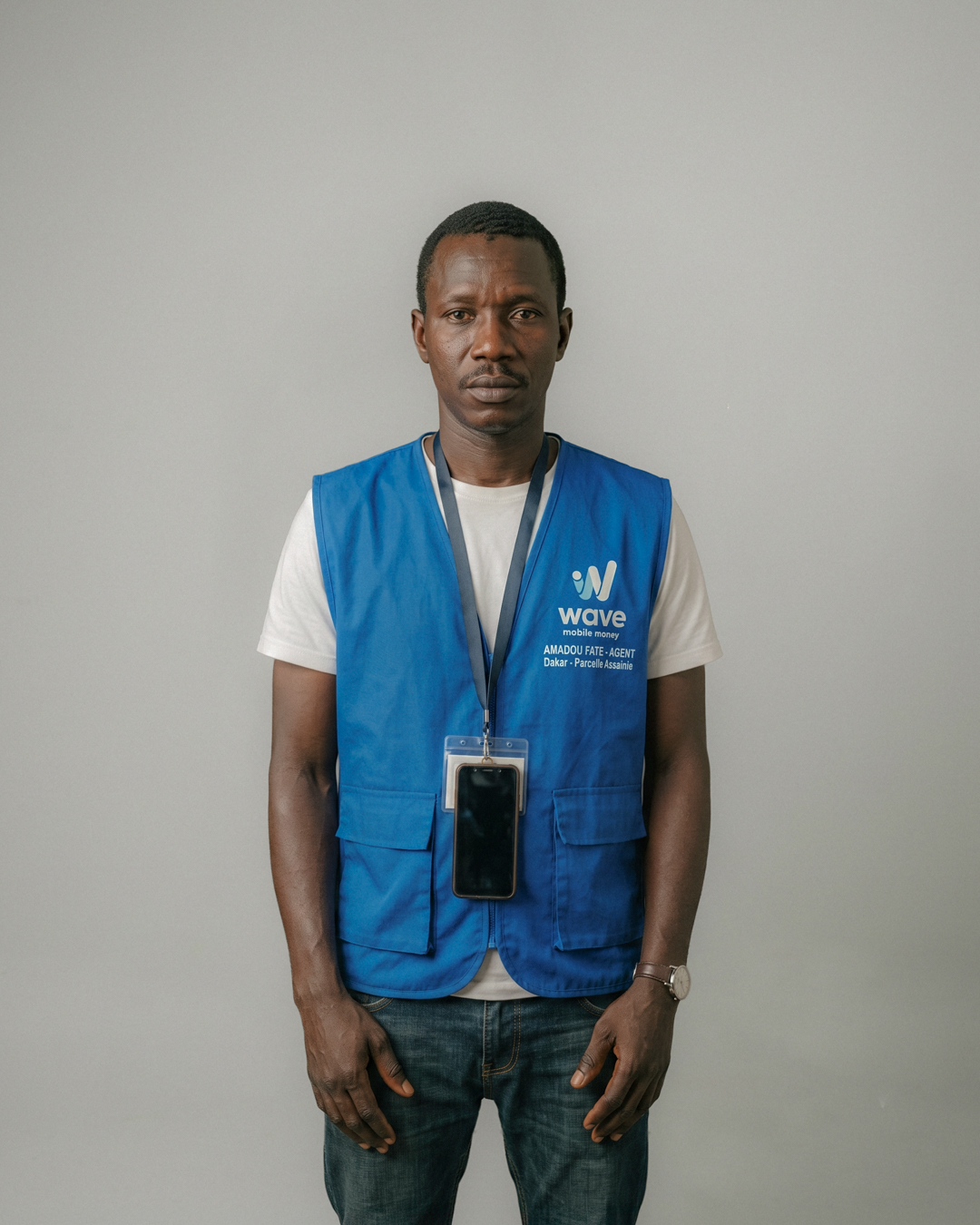
その交差点の片隅に、鮮やかなブルーで塗られた1.5メートル四方の木製のキオスクがある。 アマドゥ・ファイ(31)は、企業のロゴが大きくプリントされたナイロンベストを着て、その狭い箱の中に座っていた。小さなラジオからは、静かなコーランの読誦が流れているが、外の喧騒にかき消されがちだ。
「ジュルベルに送金したい。2万セーファーフランだ」 頭に色鮮やかな布を巻いた中年の女性が、キオスクの小窓から顔を覗かせた。彼女の指先は、市場で魚を捌いた匂いが染み付いている。彼女は汗で湿り、幾重にも折り目がついた紙幣を小窓から差し出した。
|2|
アマドゥは紙幣を受け取り、素早く正確に数える。 そして、首から下げたスマートフォンを手に取り、画面を数回タップする。アプリのシステムに入り込み、女性の電話番号と送金先の番号、そして金額を打ち込む。送信ボタンを押した瞬間、「ピッ」という無機質な音が鳴る。
完了だ。 彼女の手垢に塗れた物理的な紙幣は、アマドゥの指先を通過した瞬間に摩擦のない電子データへと変換され、光ファイバーと通信衛星を経由して、はるか数百キロ離れた内陸部の村へと瞬時に到達した。 そこには銀行口座も、ATMもない。しかし、アフリカの大地は巨大な金融インフラのクラウドネットワークで覆われている。現金を持たない新しいフィンテック経済。その高度に抽象化された無重力のシステムを、地上で物理的な世界へと繋ぎ留めているのが、アマドゥのような「路上のノード(結節点)」たちだ。
女性のスマートフォンに送金完了のSMSが届く。彼女は無言で頷き、再び埃っぽい市場の人混みの中へと消えていった。
|3|
夜、日が沈み、ダカールの街に少しだけ涼しい風が吹き始める。 アマドゥはスマートフォンの画面で今日の取引履歴を確認する。数百万セーファーフランという巨大な数字のデータが彼の端末を通過したが、彼の手元に残る手数料は、娘に新しい靴を買えば消えてしまう程度のわずかな金額だ。
デジタル空間の資金移動は完璧で、一切の疲労を知らない。 だが、アマドゥの肉体は違う。一日中プラスチックの椅子に座り続けたことで腰は鈍く痛み、排気ガスを吸い込んだ肺は重い。
彼は小窓を板で塞ぎ、南京錠をかける。 端末を通過した「電子の金」とは対極にある、引き出しに溜まった「物理的な紙幣」を重い鉄の金庫に移し替え、しっかりと抱え込む。データは空を飛ぶが、紙幣は人間の足で運ばなければならない。アマドゥは金庫の冷たい重みを腹部に感じながら、街灯の少ない夜の路地を、家路に向かって歩き始めた。
|4|
アフリカは現在、モバイルマネー経済の世界的中心地である。サハラ以南のアフリカにおいて、伝統的な銀行口座を持つ成人の割合は依然として低いが、携帯電話の爆発的な普及により、数億人がモバイルマネーを通じて金融サービスにアクセスしている。送金、公共料金の支払い、給与の受け取りに至るまで、莫大な資金が「摩擦のないデータ」として光ファイバーと通信衛星を飛び交っている。既存のインフラを飛び越えて実現したこのリープフロッグ現象は、金融包摂(フィナンシャル・インクルージョン)の奇跡として世界中で称賛されている。
しかし、先進国のように銀行の支店やATMが至る所にあるわけではないこの地域で、デジタル空間の電子マネーを現実の購買力に変えるにはどうすればいいのか。その「銀行の窓口とATM」の代わりを果たすのが、アマドゥ・ファイのような路上の代理店(エージェント)である。 仕組みはこうだ。例えば、出稼ぎ労働者がアマドゥに「物理的な紙幣(現金)」を渡すと、彼は自身が持つ業務用の「電子マネー」を相手の電話番号へ送金する(入金/Cash-in)。一方、数百キロ先の村で送金を受け取った家族は、地元の別の代理店へ行き、自身の「電子マネー」を代理店に送る代わりに「物理的な紙幣」を受け取る(出金/Cash-out)。
この送金網が機能するためには、末端の各エージェントが常に「十分な電子マネー」と「十分な現金」の両方を手元に用意(流動性管理)しておかなければならない。アフリカ全土に数百万人存在する彼らが、自らの肉体を排気ガスと熱気にさらし、多額の現金を持ち歩いて強盗などの物理的リスクを負うことで、はじめてデジタル上の数字は生活価値を持つ。高度に抽象化されたフィンテックのエコシステムは、最も泥臭く、重力に縛られた人間の肉体労働によって下支えされているのである。
English
Your hands get a little black after touching money.
I do not know whether it is from the banknotes, the sand, or the exhaust fumes. Probably all of it. When I get home and wash my hands with soap, the water turns a little brown. Looking at that water, I think about how many people’s money passed through my hands that day.
My job is to move money.
When I say it like that, it may sound like a big job. In fact, large amounts do move across the screen. Numbers enter my smartphone, and numbers leave it. But my shop is not big. It is a small wooden box, painted blue, on a corner in Parcelles Assainies.
Inside, there is a chair, a desk, a safe, and when I sit down, there is almost no space left. On hot days, the vest sticks to my back. When the wind blows, sand comes in. Every time a car rapide passes, black smoke enters through the little window.
And still, people come to a place like that.
Women from the market. Motorcycle taxi drivers. Students. Men sending money to a village. Mothers receiving remittances from Europe. Everyone gives me a number and an amount. I ask again. I confirm it one more time. Customers in a hurry all make annoyed faces, but I confirm it anyway.
Money is hard to bring back once it goes to the wrong place.
One digit in a phone number may look small, but it is very heavy.
Once, a young man shouted at me.
“How many times are you going to ask? Hurry up.”
He said that, and I felt a little angry too. But in the end, I asked again. Then the last two digits were different from the number he had first given me.
The man went quiet for a moment, and then said in a small voice, “Yes, that was it.”
That is how it is.
My job is not to be fast.
Of course, faster is better. When a line forms, customers get irritated, and nobody likes waiting in the heat. But before speed, what matters is not making a mistake. If I get one digit wrong, someone’s money for rice goes into another person’s phone. Someone’s money for medicine goes to a town they do not know.
On the screen, money is clean.
The numbers line up neatly, and when I press send, there is a small sound. Cash-in, cash-out, transfer, confirmation. Complete. Inside the smartphone, everything is fast and light.
But the banknotes in front of me are not light.
There are banknotes that smell of fish. Banknotes damp with sweat. Banknotes folded so many times their corners have gone soft. Money held by a woman who sold vegetables in the market. Money pulled from the pocket of a man who rode a motorcycle all day. Money that a mother receiving a transfer from Europe counts again with both hands.
I count those banknotes.
One, two, three.
My fingers get a little dirty.
Still, I do not dislike that dirt.
I do not really trust clean money. At least, the money that comes to my little window always carries some kind of smell. Fish, sweat, perfume, sand, the leather of an old wallet. Money carries the day of the person who brought it. It is the smell of all the places it has passed through.
When it enters the screen, it becomes only a number.
Twenty thousand CFA francs.
Five thousand CFA francs.
One hundred fifty thousand CFA francs.
Once they become numbers, they all have the same face.
But I know they are not the same.
One woman sends money to her mother in Diourbel.
One man pays his younger brother’s school fees in the village.
One mother comes to receive money from her son in Spain.
One young man checks his balance to pay the electricity bill.
On the screen, the transfers look the same, but each one has something different inside it.
That is why I try not to listen too much to customers’ stories. But I cannot avoid listening completely either. Money shows on people’s faces. The face of someone whose transfer should have arrived but has not. The voice of someone who needs cash today. The person who narrows their eyes a little when they hear the fee.
The company posters say it is convenient. Fast, safe, simple. That is not a lie. You can receive money even without a bank account. You can send it to family far away in a few seconds. For my mother’s generation, I think this is truly a big thing.
Safe.
The money on the screen is probably safe.
But my safe is not.
My shop needs cash. Electronic money alone is not enough for business. Without cash, customers cannot withdraw. Without electronic money, customers cannot deposit. Both are necessary, and if either one is too much or too little, business does not work.
Toward the time I close the shop, I start looking around a little. Has the same motorcycle been parked there for a while? Is there a man looking at my window more than he needs to? Most days, nothing happens. But to make a day where nothing happens, I have to keep paying attention.
When I get home, my daughter is often already asleep.
I think her shoes are getting small. My wife has said the same thing. While counting the day’s commission, I think about when I can go buy her new ones. If you only looked at the amount that passes through my screen, it might seem easy to buy my daughter a pair of shoes. But money that passes through and money that remains are not the same.
A large amount passes through my device, and a small commission remains in my hands.
When my little window is closed, there are people who have trouble. This is not boasting. On some days, it is simply a fact. If I run out of cash, someone may not be able to buy rice that night. If I get the number wrong, someone’s transfer will not arrive.
The reason I ask again and again is not because I doubt the customer. I confirm because I trust them.
On Fridays, I try to go to prayer whenever I can. While I pray, I do not look at smartphone notifications. If even that time is taken by the screen, I no longer know what I am working for.
After prayer, when I look at my hands, sometimes there is still black dirt under my nails.
Whenever I see it, I laugh a little.
Even after purification, the dirt of money does not come off easily.
This dirt is proof that I held someone’s money again today. Proof that someone came to my little window, gave me a number, handed me money, and I sent it without making a mistake.
Money flies through the air.
That is what the company says, and I think customers feel it too. It reaches family far away in a few seconds. But I know the weight of money. The weight of banknotes damp with sweat. The weight of carrying the safe in my arms. The weight of the time it takes to check each digit.
That is why tomorrow, I will ask again.
“The number, one more time.”
The customer may make a slightly annoyed face.
Even so, I will ask one more time.
|1|
Parcelles Assainies district, Dakar, Senegal. A yellow and black "Car Rapide" minibus speeds through the intersection spewing black smoke, its horn blending with shouts in Wolof. The temperature is 35 degrees Celsius. A dry wind carries fine sand from the Sahara, tinting the entire city in a faint sepia.
On a corner of that intersection stands a brightly painted blue wooden kiosk, 1.5 meters square. Amadou Faye (31), wearing a nylon vest emblazoned with a large corporate logo, sits inside the cramped box. A small radio plays a quiet recitation of the Quran, though it is often drowned out by the din outside.
"I want to send money to Diourbel. Twenty thousand CFA francs." A middle-aged woman with a brightly colored cloth wrapped around her head peers through the small window of the kiosk. Her fingertips carry the lingering scent of fish gutted at the market. She slides crumpled, sweat-dampened banknotes through the window.
|2|
Amadou takes the bills and counts them swiftly and accurately. He then picks up the smartphone hanging from his neck and taps the screen a few times. He enters the app's system, types in the woman's phone number, the recipient's number, and the amount. The moment he presses send, a sterile electronic beep sounds.
It is done. The grimy, physical banknotes she handed over are converted into frictionless electronic data the instant they pass through Amadou's fingertips. Via fiber optics and communication satellites, the money instantly reaches a village hundreds of kilometers inland. There are no bank branches there, no ATMs. Yet, the African continent is blanketed by a massive cloud network of financial infrastructure. A new, cash-free fintech economy. And it is the "street-level nodes" like Amadou who anchor this highly abstracted, zero-gravity system to the physical world on the ground.
An SMS confirming the transfer arrives on the woman's smartphone. She nods silently and disappears back into the dusty crowds of the market.
|3|
At Night,The sun has set, and a slightly cooler breeze begins to blow through the streets of Dakar. Amadou checks his transaction history on his smartphone screen. Data representing millions of CFA francs has passed through his device today, but the commission that remains in his hands is a meager amount—just enough to disappear if he buys his daughter a new pair of shoes.
The movement of funds in the digital space is perfect and knows no fatigue. But Amadou's body is different. His lower back aches dully from sitting on a plastic chair all day, and his lungs feel heavy from breathing in exhaust fumes.
He boards up the small window and fastens the padlock. In stark contrast to the "electronic money" that passed through his device, the "physical banknotes" accumulated in his drawer must be transferred into a heavy iron safe, which he holds tightly against himself. Data flies through the sky, but paper money must be carried by human legs. Feeling the cold weight of the safe against his stomach, Amadou begins the walk home through the dimly lit night alleys.
|4|
Africa is currently the global epicenter of the mobile money economy. In Sub-Saharan Africa, while the percentage of adults with traditional bank accounts remains low, explosive growth in mobile phone penetration has allowed hundreds of millions to access financial services through mobile money accounts. From remittances to utility payments and wage transfers, enormous sums of capital fly through fiber optics and communications satellites as "frictionless data." This leapfrogging phenomenon, which bypassed legacy infrastructure, is lauded worldwide as a miracle of financial inclusion.
However, in a region without the ubiquitous bank branches and ATMs found in developed countries, how is electronic money in the digital space converted into real-world purchasing power? Serving as the substitute for "bank tellers and ATMs" are street-level agents like Amadou Faye. The mechanism works like this: When a migrant worker hands "physical cash" to Amadou, he transfers the equivalent amount of "e-money" from his merchant account to the recipient's phone number (Cash-in). Meanwhile, the family receiving the transfer in a village hundreds of kilometers away visits another local agent, transfers their "e-money" to that agent, and receives "physical cash" in return (Cash-out).
For this remittance network to function, each street-level agent must constantly maintain sufficient balances of both "e-money" and "physical cash" on hand (liquidity management). There are millions of such agents across the continent. They expose their bodies to exhaust and heat, bearing the physical risk of carrying large amounts of cash against theft; only through their labor do the digital numbers gain practical value. The highly abstracted ecosystem of fintech is inextricably underpinned by the most grounded, gravity-bound physical human labor.
日本語本作に登場する人物・語りは、実在の個人に基づいたものではありません。設定・描写にあたっては、人物の文化背景、言語、歴史、現在の社会状況について文献・記録・当事者の語り等を調査し、それらをもとに構成・再構成し、物語として描いています。ただし、たとえ綿密なリサーチをもとにしていても、"他者の声を仮構すること"には構造的な危うさがあると私は考えています。この作品は、その危うさごと提出するための試みです。
EnglishThe characters and narratives presented here are not based on any real individuals.The setting and depiction are constructed and restructured through research into cultural backgrounds, languages, histories, and contemporary conditions—including archival sources and first-person accounts—and are rendered here as a narrative.However, even when grounded in careful research, I believe that fictionalizing the voice of another carries inherent structural risk.This piece is an attempt to present that risk itself—openly and with accountability.