.webp)


.png)


The Unchosen ポートレート・シリーズに捧ぐ
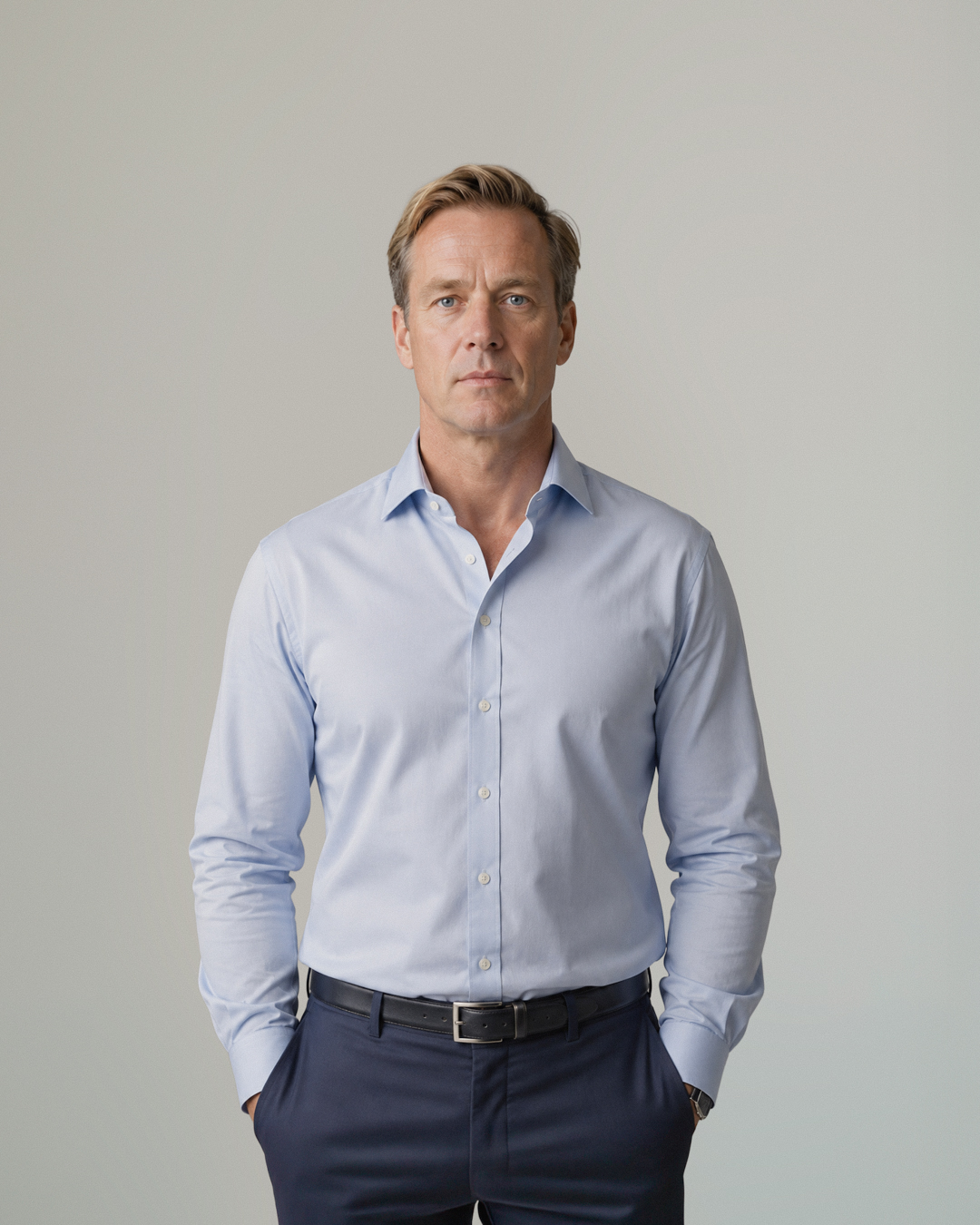
S.05 – Sergio Ruiz
※This article is written in Japanese and English. 日本語が前半、英語は後半に掲載されています。
|1|名もなき軌道の上で
セルヒオ・ルイスは、チリ・サンティアゴ郊外を走る「グリーンライン」の運転士として、毎日12時間、バスの車輪と都市の時間に身を委ねている。出発地点は定まっているが、自身の行き先には名前がない。彼の生活は、誰かをどこかへと運ぶことで構成され、自らの現在地について語ることはほとんどない。
車内では自動音声が目的地を告げ、乗客の生活が背後で交差する。だが、セルヒオの存在は、ほとんどその空間に「在る」だけで通過していく。制服は色褪せ、ネクタイの結び目には反復の跡が残り、後方モニターの中でだけ、彼の横顔が繰り返される。
彼の誇りは、時間通りに、誰かを安全に届けるという一点にある。エンジン音と交通信号に囲まれながら、彼は職務を正確に果たすことに集中している。見返りは少ないが、その正確さこそが、彼にとっての“責任”であり“自尊心”である。
|2|通過する者としての共同体
家庭でも、会話は多くはないが、互いの存在を確かめ合うやりとりはある。妻とは帰宅後に目を合わせ、「今日も無事だったか」と小さくうなずき合う。9歳の娘には、「学校はどうだった?」と毎日声をかける。返事は短いが、それは会話の終わりではなく、日々を積み重ねるためのリズムだ。
兄弟姉妹との連絡は絶えて久しく、親はすでにこの世を去った。故郷の記憶は断片化し、都市のノイズのなかで後景に溶けていった。休日の川辺だけが、音のない空白を受け入れてくれる場所となる。
問いは胸の内にある。「なぜ皆は急ぐのか」「どこへ帰るのか」。だがそれを言葉にすることはない。語らないことは無関心ではなく、日々の生活を守るための選択である。
|3|語られない労働、聞かれない構造
セルヒオが生きるのは、都市の労働と家族制度の周縁である。メスティーソの男性として、特別扱いされることも拒絶されることもなく、ただ「働き続ける者」として位置づけられてきた。中等教育を終えてすぐに運転手となり、それから30年以上、制度のなかで“問題化されない存在”として通過してきた。
だが、バス運転士の待遇は厳しい。チリ国内では長時間労働が常態化しており、民営化された交通セクターでは労働環境の整備が後手に回っている。賃金は最低賃金に近く、交代制のシフトは身体的・精神的負担を増大させている。近年は職業的尊厳の低下も指摘されており、若年層の後継者不足も深刻だ。
労働組合は存在するものの、実効性には限界があり、制度的支援は不十分なままだ。制度は彼を「運ぶ者」としてしか認識しておらず、その思考や疑問に耳を傾ける構造はない。
セルヒオ・ルイスの姿は、「見えない労働」としての構造的沈黙を映し出している。
私たちはこのポートレートを通して問う——
あなたは、都市のなかで誰の声を聞こうとしているのか?
本作に登場する人物・語りは、実在の個人に基づいたものではありません。
設定・描写にあたっては、人物の文化背景、言語、歴史、現在の社会状況について文献・記録・当事者の語り等を調査し、
それらをもとに構成・再構成し、物語として描いています。
ただし、たとえ綿密なリサーチをもとにしていても、“他者の声を仮構すること”には構造的な危うさがあると私は考えています。
この作品は、その危うさごと提出するための試みです。

|1|On a Track Without a Name
Sergio Ruiz spends twelve hours a day as a bus driver on Santiago’s “Green Line,” surrendering himself to the wheels and time of the city. His departure point is fixed, but there is no name for where he is headed. His life is structured around taking others somewhere, with little space to speak of his own position.
Inside the bus, automated voices announce the stops. Behind him, the lives of countless others pass. His presence largely passes through the space. His uniform is faded, the knot of his tie shaped by repetition, and his profile reflected again and again on the rear monitor.
What Sergio holds pride in is getting people to their destinations safely and on time. Surrounded by the hum of engines and traffic lights, he focuses on carrying out his duties with precision. There’s little reward, but this accuracy itself is his responsibility—and his dignity.
|2|A Community That Passes Through
At home, conversations are not abundant, but there is a rhythm to affirming each other’s presence. After work, he and his wife exchange a glance to say, “You’re home safe.” To his nine-year-old daughter, he asks every day, “How was school?” The answers are short, not because communication ends there, but because it marks the cadence of everyday life.
His ties with siblings have long faded, and his parents are gone. Memories of his birthplace have fragmented and melted into the background noise of the city. Only the riverside at the edge of the city accepts him in its quiet blankness on his day off.
Questions remain within him: “Why is everyone in such a hurry?” “Where are they going home to?” He doesn’t put them into words—not from indifference, but because it’s a choice to protect his daily life.
|3|Unspoken Labor, Unheard Structure
Sergio lives on the margins of labor and family structures in the city. As a mestizo man, he is neither privileged nor outright rejected—simply placed as one who “continues to work.” After finishing secondary school, he became a driver and has spent over 30 years passing through systems that never marked him as a problem.
But conditions for bus drivers are harsh. In Chile, long working hours are common, and privatized transportation sectors often lag behind in improving working environments. Wages are close to the minimum, and rotating shifts add to both physical and mental burden. Recently, there has also been a decline in occupational dignity, with a serious shortage of younger successors.
Though unions exist, their effectiveness is limited, and institutional support remains inadequate. The system only recognizes him as “one who drives,” with no framework to hear his thoughts or doubts.
Sergio Ruiz reflects the structural silence of “invisible labor.”
Through this portrait, we ask—
Whose voices do you choose to hear in the city?
The characters and narratives presented here are not based on any real individuals.
The setting and depiction are constructed and restructured through research into cultural backgrounds, languages, histories, and contemporary conditions—
including archival sources and first-person accounts—
and are rendered here as a narrative.
However, even when grounded in careful research, I believe that fictionalizing the voice of another carries inherent structural risk.
This piece is an attempt to present that risk itself—openly and with accountability.